Route leads and cases to the right person every time.
Send net-new leads to SDRs, qualified ones to AEs, renewals and expansions to CSMs — and automate the handoff between them. Every record reaches the right lane before anyone argues about whose turn it is.
•
100% Salesforce-native
•
Live in minutes

Trusted for fair, fast routing by 20,000+ users since 2013.





Put every lead in the right lane.

What is role-based lead routing?
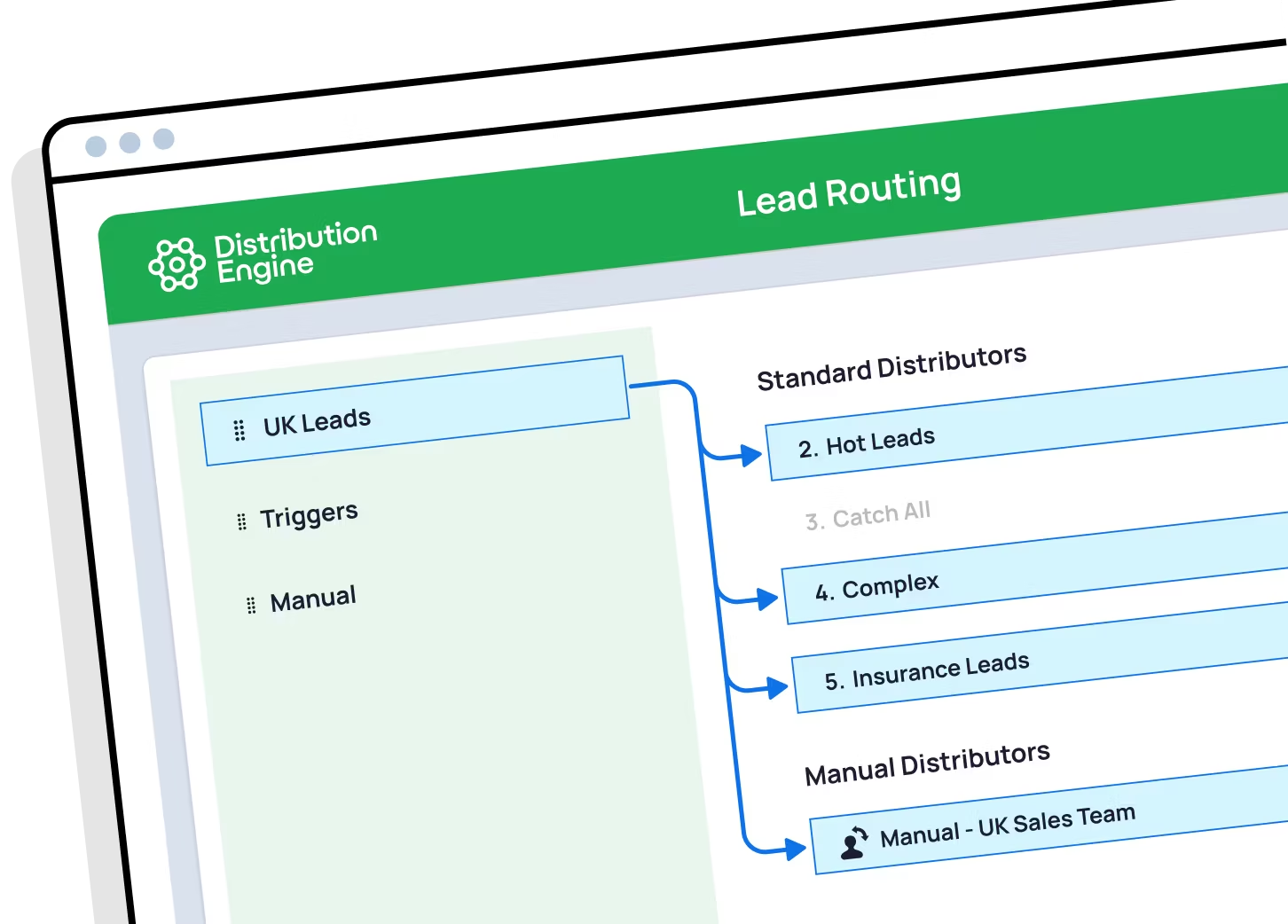
Role-based routing sends each record to the right function in your sales org — SDR, AE, CSM or partner manager — before deciding which individual takes it. Net-new leads go to prospecting, qualified ones to closers, existing customers to the account team. Distribution Engine runs those lanes as a single rule chain in Salesforce, and round robins within whichever team the record lands in.
Role-based or skills-based routing — what’s the difference?
Role is about position in the funnel; skill is about expertise. Role-based routing decides whether a record belongs to an SDR, an AE or a CSM. Skills-based routing then decides who inside that team is best placed to take it — by product, language, industry or seniority. Most teams use both: role picks the lane, skills pick the person, round robin keeps it fair. See Skills-Based Routing for the expertise side.
Can I automate the SDR to AE handoff?
Yes, and it’s the most common reason teams route by role. When an SDR marks a lead qualified, or a meeting is booked, Distribution Engine reassigns it to an AE, alerts them, and starts an SLA clock. If the AE doesn’t pick it up in time, it escalates or moves to the next available one — so the handoff can’t quietly die in a Slack thread.
Can I use the Salesforce role hierarchy for routing?
Not really — it’s a different tool for a different job. The Salesforce role hierarchy governs record visibility and sharing: who can see and edit what. It has no concept of which type of rep should work an incoming lead, and it can’t reassign a record when the deal stage changes. Distribution Engine adds that routing layer on top, without touching your sharing model.
Can I route leads from target accounts straight to dedicated AEs?
Yes. Match the lead to its account, check whether that account is a named or target account, and route it straight to the AE or account team who owns it — bypassing the SDR lane entirely. Everything else can follow the normal role chain. That’s the core of an ABM coverage model, and it runs natively inside Salesforce.
What about existing customers and renewals?
Route them to the CSM or account team rather than the new-business lane. An enquiry from a current customer should never land with a rep who’ll pitch them the product they already own — matching the lead to its account first is what makes that possible.
Can senior reps get the high-value leads?
Yes. Route by deal size, segment or strategic flag so enterprise records go to senior AEs while the rest follow the standard rotation. You can also weight the split, giving stronger reps a larger share without cutting anyone out entirely.
How do the lanes work together?
As one rule chain, evaluated in the order you set. A typical setup checks whether the lead matches an existing account first, sends customers to the CSM team, target accounts to their AE, and everything else to the SDR pool — then round robins within whichever team it lands in. One chain, no overlaps, no arguments.
%20dark.avif)