Speed to lead, measured in seconds.
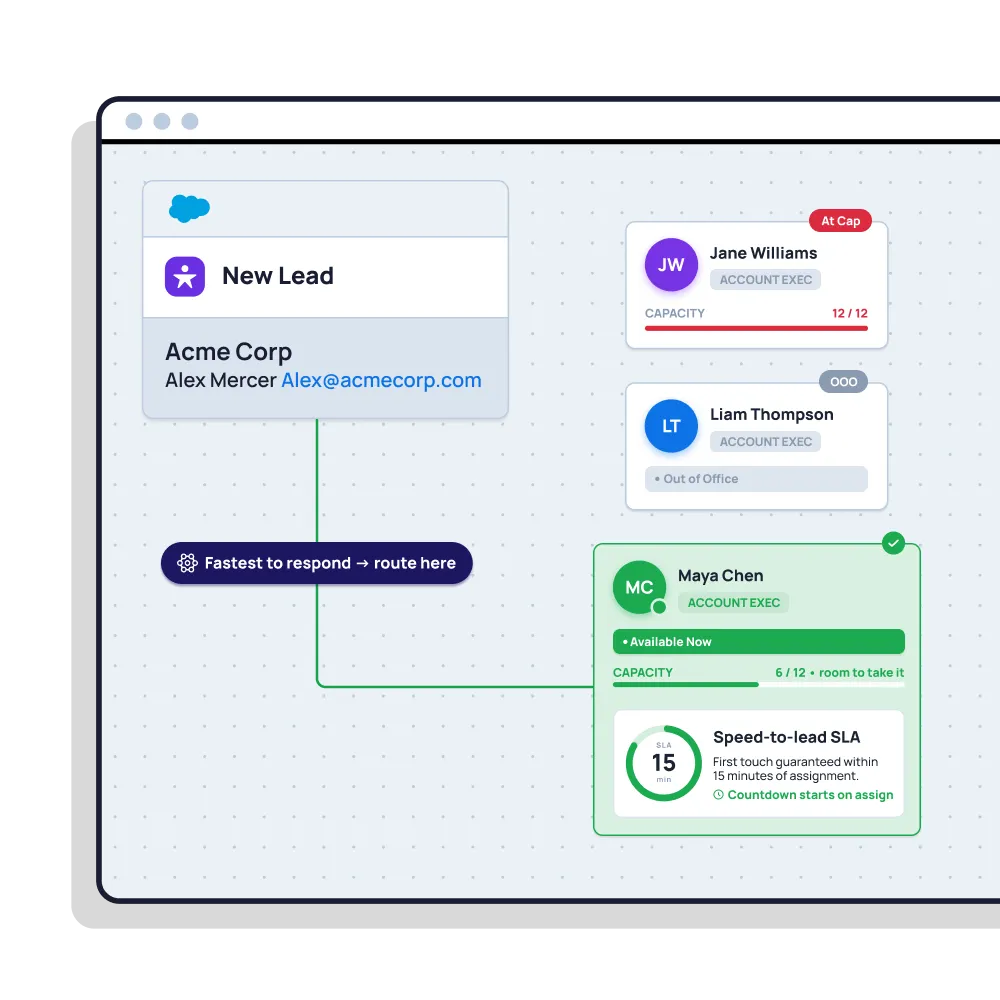
The moment a lead lands, Distribution Engine assigns it, skips anyone away or at capacity, and alerts the owner where they’re already working. No queue, no morning triage, no waiting for someone to notice.
•
100% Salesforce-native
•
Live in minutes
Trusted for fair, fast routing by 20,000+ users since 2013.


Answer inbound before your competitors do.
What is speed to lead?
Speed to lead is the time between an inbound lead arriving and a rep making first contact. It matters because response time and conversion are closely linked — leads contacted within minutes are far more likely to be qualified than those contacted hours later. Distribution Engine cuts the part of that time you actually control: getting the lead to the right rep, and making sure they know it’s there.
Speed to lead vs lead response time — what’s the difference?
They’re used interchangeably, but there’s a useful distinction. Lead response time is the measurement — the minutes elapsed between the lead arriving and first contact. Speed to lead is the discipline of driving that number down: the routing, alerting and escalation that make a fast response possible in the first place. You measure one and manage the other.
What’s the best speed-to-lead software for Salesforce?
Look for four things: assignment that fires the instant a record is created, alerts that reach reps where they already work, availability and capacity checks so leads don’t land with someone who can’t act, and automatic re-routing when a lead isn’t picked up in time. Distribution Engine does all four natively inside Salesforce — no middleware, so there’s no sync lag between the lead arriving and the rep hearing about it. LeanData and Chili Piper are the usual alternatives; see our comparison pages for a side-by-side.
How do I improve speed to lead in Salesforce?
Start by finding where the minutes actually go — it’s rarely the form, and almost always the handoff. Assign on creation rather than on a schedule; alert the owner in Slack or on mobile instead of relying on them to check a list view; skip reps who are away or at capacity; and set an SLA that re-routes the lead if it isn’t worked. Then measure real response times by rep so you can see what’s improving.
How does speed to lead impact revenue?
Two ways. Contact rates fall sharply the longer you wait, so slow responses simply lose conversations that a faster team would have had. And when several vendors are in play, the first credible response often sets the agenda for the rest of the deal. Faster routing turns the same volume of inbound into more qualified pipeline, without spending more on demand generation.
What’s a good speed-to-lead target?
Many B2B teams aim to make first contact within five minutes for high-intent inbound, because contact rates drop off quickly beyond that. The right target depends on your buying cycle and team size, though — what matters more is setting a number, holding the team to it, and measuring it honestly. See SLA Management for enforcing the target you set.
Why are our leads still slow if routing is instant?
Usually because assignment and awareness aren’t the same thing. A lead can be routed in a second and still sit unread for hours if nothing told the rep about it, or if it went to someone on holiday. Instant alerts and availability checks are what turn instant assignment into an instant response.
Does it work for after-hours leads?
Yes, and it’s worth deciding deliberately. Overnight leads can wait in a queue and go out the moment the team comes online, route to an on-call rep, or pass to the next region starting its day. Anything is better than a lead sitting on an empty desk until 9am.
%20dark.avif)