Distribution Engine vs Chili Piper Distro.
Salesforce-native lead routing your ops team owns, and can trial today.
Sales and ops teams need routing that runs inside Salesforce and that they can evaluate for themselves, not an external engine sold as part of a ‘demand conversion platform’. See why high-growth Salesforce teams choose Distribution Engine over Chili Piper Distro.
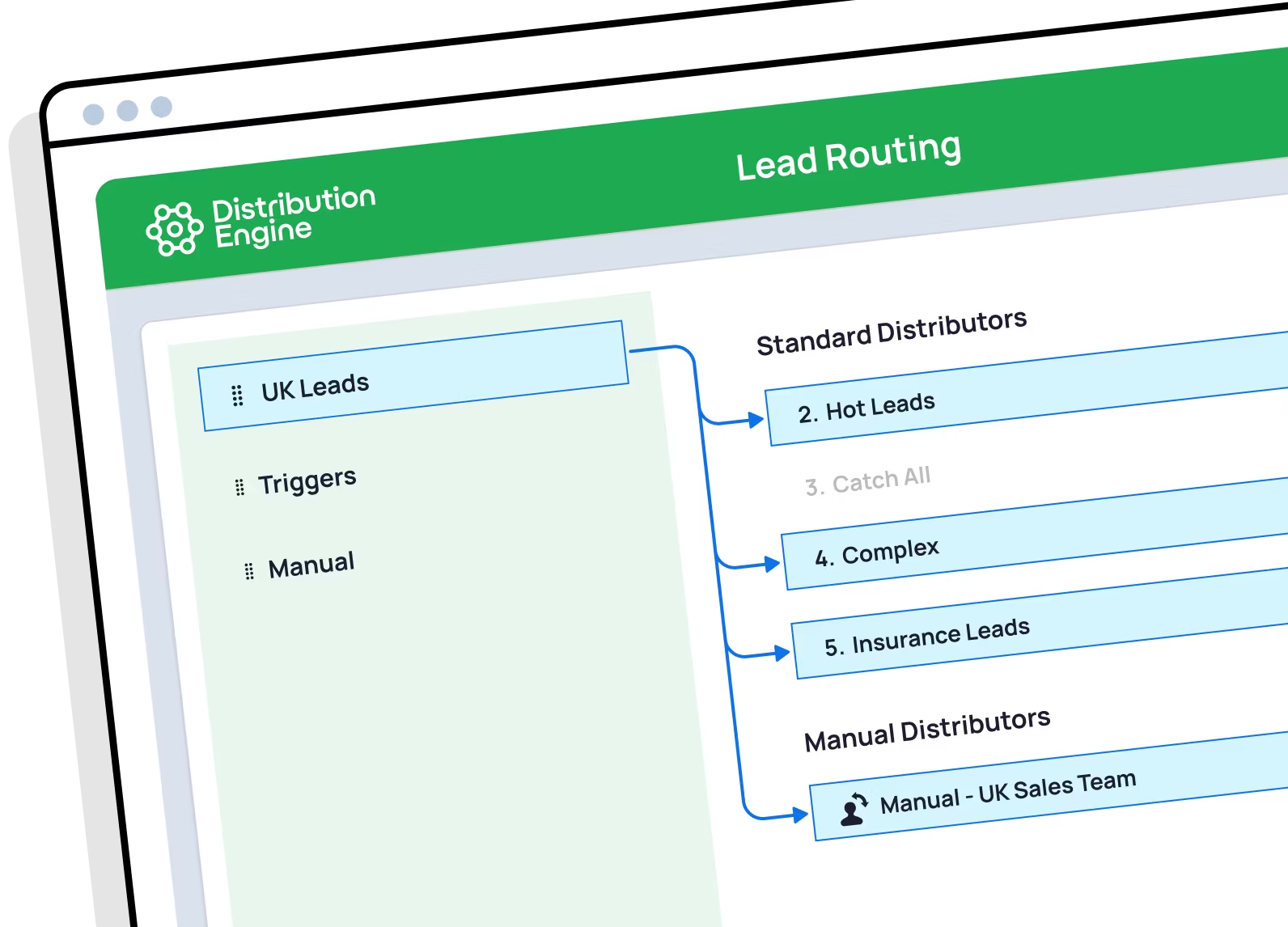
Trusted by Salesforce teams worldwide.





The lowdown on Chili Piper Distro.
Chili Piper is a capable platform with a strong brand. We’ve spoken to teams who use it day-to-day. The feedback is mixed, and if Salesforce is at the heart of your GTM, there are a few things worth knowing before you commit.
Another platform.
Distro’s routing engine doesn’t run in Salesforce. It sits outside your org, connects in, and your rules and teams live in Chili Piper’s own workspace. Most Salesforce buyers assume routing happens inside the org. Here, it doesn’t.
No test drive.
As of 2026 there’s no public trial or sandbox. Evaluation is sales-led and demo-gated. For ops teams who prefer to evaluate software hands-on, the only path in is a demo and testing it after purchase.
Priced as a suite.
There is no standalone Distro plan. Routing-only buyers still purchase the Routing & Scheduling package, from $15,000 a year for 15 seats, then $45 per seat per month after that, billed annually. Fair value if you use the whole platform. A high bar if all you need is Salesforce record routing.
Matching runs deep.
Credit where it is due: matching and deduplication are among Distro’s strongest areas. Lead-to-account, parent-to-child, and duplicate matching with filters and tie-breakers handle messy CRM data well. For ABM-led teams where getting records into the right account is the main job, it is a capability worth taking seriously.
What Chili Piper users say.
Based on customer research and reviews from Capterra and G2, reproduced as published.
“There have been a lot of issues with reliability and things not being routed correctly. It’s created skepticism within the sales team.”
“We’re using Chili Piper today for our inbound form flow and routing. Transparently, it doesn’t always work as well as it should. It’s definitely a headache for us.”
“I hate their interface. I hate using their product. The terminology is confusing even after two and a half years of use.”
“Chili is a complicated platform that requires a lot of effort to learn and master, with a cumbersome UI and un-intuitive UX sometimes, as an admin.”
Looking for routing and meeting scheduling?
This page compares the routing tools. Chili Piper bundles routing and scheduling into one demand conversion platform.
NC Squared keeps them as two focused, Salesforce-native products that work together: Distribution Engine for routing, and Booking Engine for meeting scheduling, handoff, and booking links, at $10 per user per month.
Booking Engine: Scheduling, handoff and booking links, native to Salesforce.
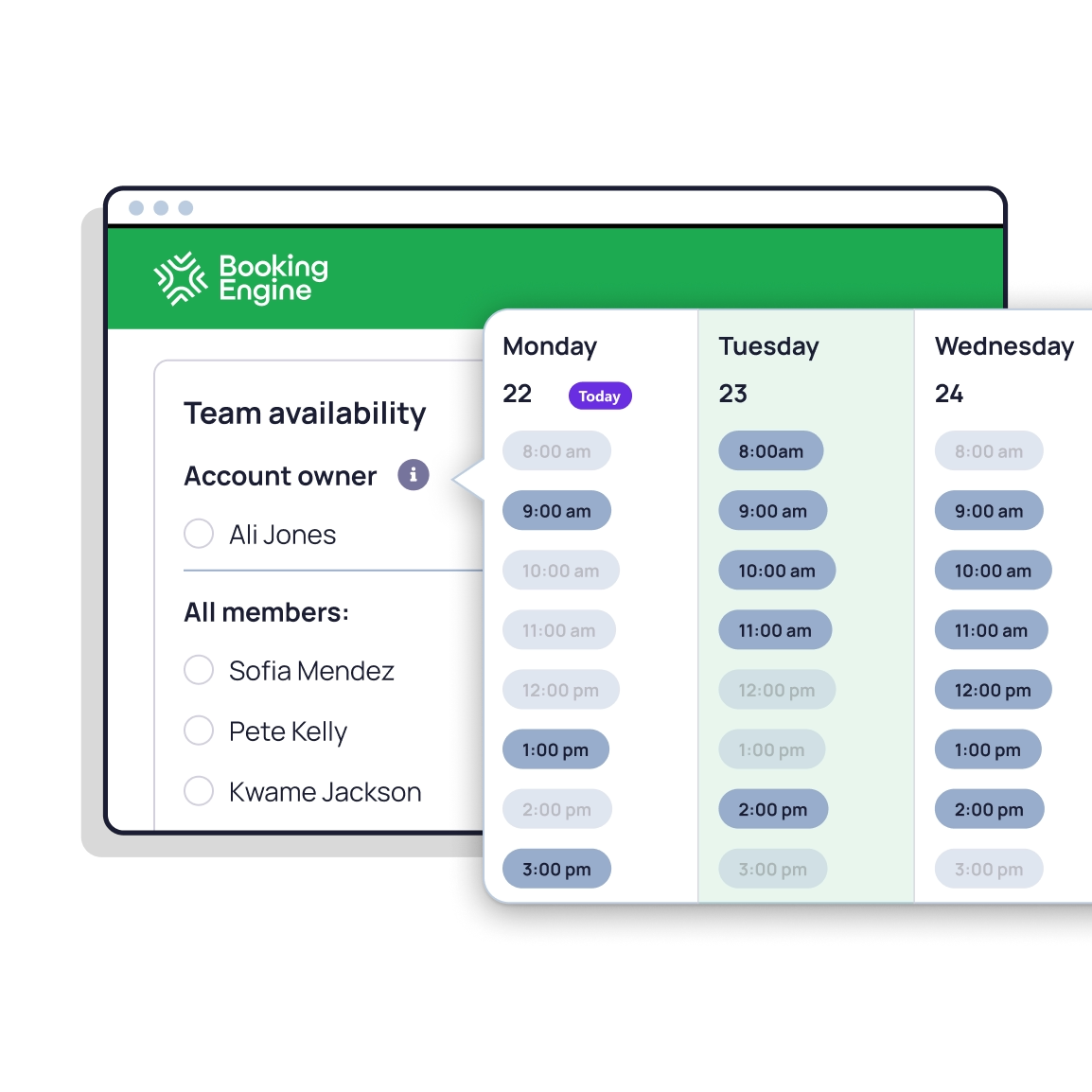
Everything routing needs. Nothing it doesn’t.
Try before you buy.
A fully functional 30-day free trial from AppExchange. No discovery call, no vendor activation. Install it and route real records in your own org. Distro offers no public trial or sandbox.
Native to Salesforce.
Routing data and processing stay inside your Salesforce org. No external routing engine, no dependency on OAuth connectivity or Streaming API event limits to keep leads moving.
Ops-owned from day one.
Your Salesforce Admin configures, owns, and adjusts routing logic directly, with onboarding support on every plan and no professional services gate. The team that owns the work owns the workflow.
Route every object.
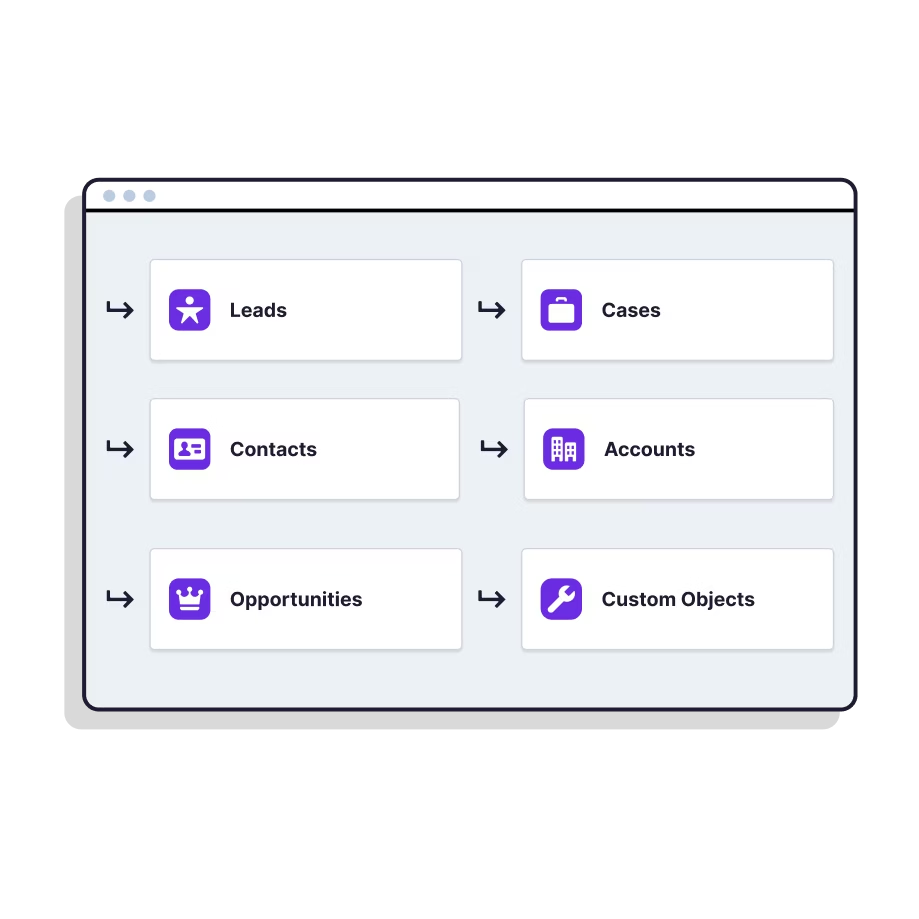
Route leads, cases, contacts, accounts, opportunities, and custom objects. A lead routing deployment today can expand to case routing or custom objects tomorrow, without renegotiating a platform contract.
Priced for routing.
Published per-user pricing: Starter $20, Advanced $35, Unlimited $55 per user/month, from a 5-licence minimum. And you're paying for routing and matching, not a bundled platform with a $15,000 annual minimum spend.
Support that goes above and beyond.
From setup to fine-tuning, the NC Squared team is an extension of yours, not a professional services function you budget for separately. Included on every plan.
Add booking when you want it.
Distribution Engine is routing for teams that want routing. When you need more, Booking Engine adds SDR-to-AE handoff, web form booking, and booking links on the same Salesforce-native routing logic. You take the routing tool on its own, then add scheduling when it earns its place.
Matching and deduplication.
Both tools match incoming records to existing accounts, contacts, and duplicates. Distro's matching depth is a genuine strength, though its duplicate detection relies on Salesforce Duplicate Rules and Matching Rules being maintained correctly. Distribution Engine handles lead-to-account matching and deduplication reliably for most Salesforce routing scenarios.
Round robin and workload controls.
Both tools support round robin, weighting, and capping so records spread fairly across a team. Both let you cap volume per rep and hold or reroute records when someone is unavailable.
SLA tracking and audit logs.
Both tools monitor whether an assigned rep acts in time and can reassign, notify by Slack or email, and log routing decisions. Useful for diagnosing missed assignments and enforcing response targets.
Matching and deduplication.
Both tools match incoming records to existing accounts, contacts, and duplicates. Distro's matching depth is a genuine strength, though its duplicate detection relies on Salesforce Duplicate Rules and Matching Rules being maintained correctly. Distribution Engine handles lead-to-account matching and deduplication reliably for most Salesforce routing scenarios.
Round robin and workload controls.
Both tools support round robin, weighting, and capping so records spread fairly across a team. Both let you cap volume per rep and hold or reroute records when someone is unavailable.
SLA tracking and audit logs.
Both tools monitor whether an assigned rep acts in time and can reassign, notify by Slack or email, and log routing decisions. Useful for diagnosing missed assignments and enforcing response targets.
Chili Assist AI.
Credit where it is due. Chili Assist is an AI agent inside the Distro admin that builds, edits, and explains routing rules from plain-English descriptions, then asks you to review before anything goes live. AI helps you author the rules, and the rules still run on defined logic you can audit. It is a model NC Squared respects and is developing along similar lines.
Enrichment waterfalls.
Distro connects to Clay, LeadIQ, Apollo, Lusha, and ZoomInfo with provider waterfalls to enrich records before routing. Worth noting: enrichment relies on those external subscriptions, and account-level enrichment is not currently supported.
Broader GTM platform.
Distro sits alongside Form Concierge, Handoff, ChiliCal, chat, and re-engagement in one platform. For teams that want website conversion, scheduling, and routing from a single vendor, that breadth is a real draw. Distro itself does not include scheduling.
“We’ve handed over the keys to our Customer Service team and Sales Ops managers, and they’re running with it.”

Which lead routing tool is right for you?
Choose Chili Piper Distro when you want a full go-to-market platform and routing is one requirement among several.
Choose Distribution Engine when your team owns the workflow and you want native routing that works, not a platform that requires a project to implement.
Go further with Distribution Engine
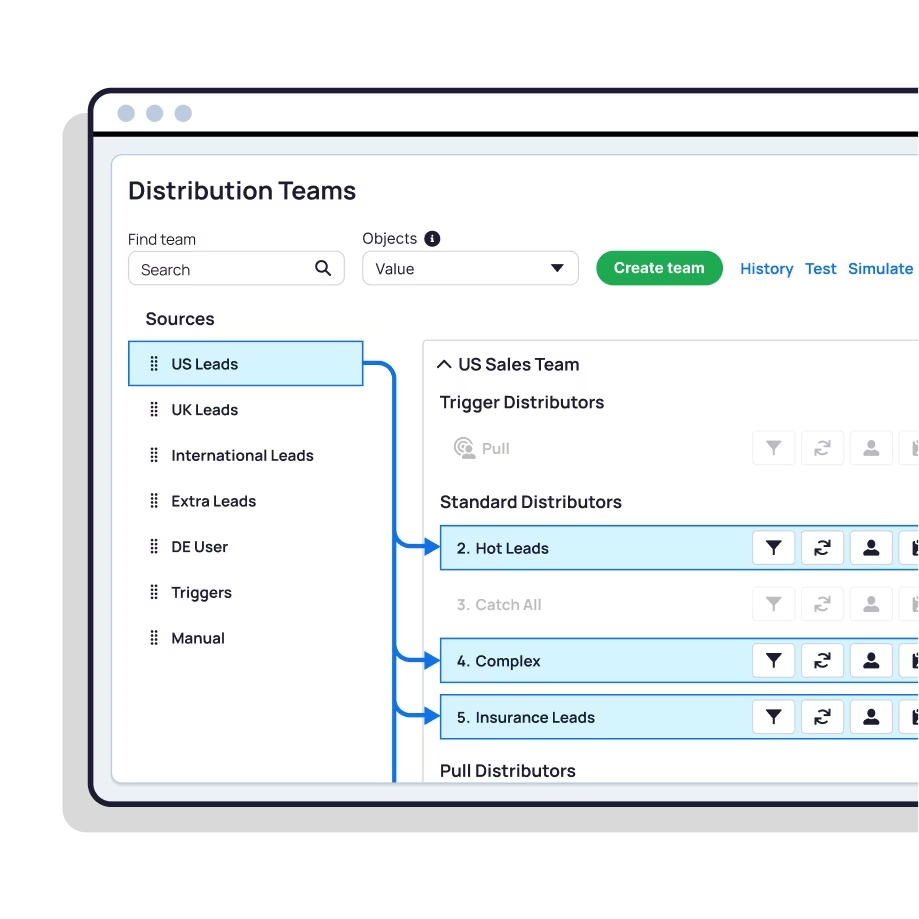
Routing that lives inside your org.
With Chili Piper Distro, the routing engine runs outside Salesforce and reads and writes to your org through OAuth. Rules and teams are managed in the Chili Piper workspace, and processing depends on Salesforce PushTopics and Streaming API event limits. Reach those platform limits and new triggers or routing events can stall. Chili Piper calls this a native Salesforce integration, but the engine runs outside your org and connects in, rather than executing inside Salesforce, and that distinction matters to security and IT reviewers.
Distribution Engine runs entirely inside Salesforce. Routing data and processing never leave your org, there is no external engine to depend on, and no separate integration user to license. For teams that want routing to stay where their data already lives, that is the whole point.
See it work on your data, before you buy.
With Chili Piper Distro, there is no public trial or sandbox. Evaluation runs through a sales-led process, and our mystery shopper could not test routing accuracy, speed, or day-to-day administration first-hand. You’re asked to commit largely on the strength of a demo.
Distribution Engine offers a fully functional 30-day trial directly from AppExchange. Install it, connect your org (or sandbox), and route real records yourself, no vendor gate. You judge the product on your own data before any conversation about contracts.
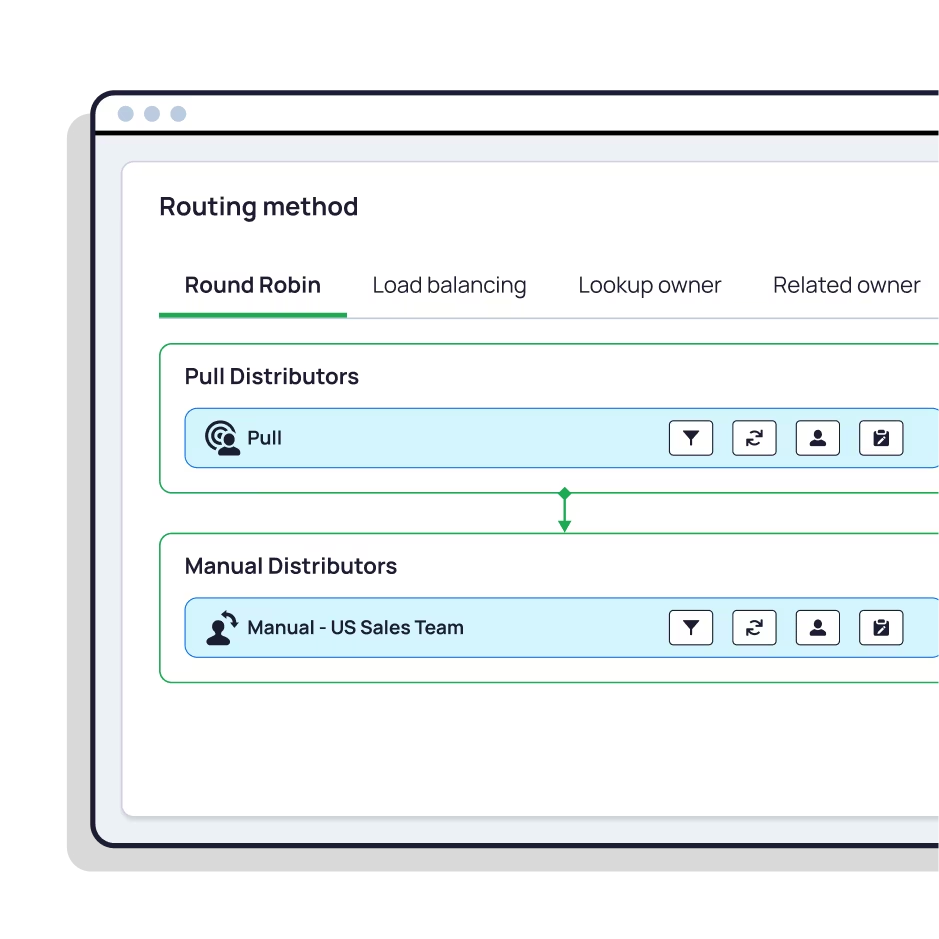
The teams that own the work should own the workflows.
With Chili Piper Distro, routing is sold inside the Routing & Scheduling package from $15,000 a year for 15 seats, then $45 per seat per month, billed annually, with no standalone Distro plan. Implementation expects cooperation between Sales or Revenue Ops and a Salesforce admin. Capable, but a real commitment before the first record is routed.
With Distribution Engine, your ops team configures, owns, and adjusts routing directly, with published per-user pricing and onboarding included. No professional services function to budget for, no support request every time a territory changes. The people closest to the work keep control of it.
More features to power your growth.
Feature | Distribution Engine | Chili Piper Distro |
|---|---|---|
Architecture | ||
Salesforce-native | Fully native. Routing data and processing stay inside the Salesforce org; no external routing engine and no dedicated integration user licence. | Connected via OAuth. The routing engine runs outside Salesforce; rules and teams are managed in the Chili Piper workspace. |
Platform dependencies | Runs on native Salesforce automation; not subject to external PushTopic or Streaming API event ceilings. | Depends on Salesforce PushTopics and Streaming API events; reaching those limits can prevent new triggers activating or stall routing. |
Routing capabilities | ||
Lead & record routing | Round robin, weighted, skills-based, availability-aware, territory, and queue-based, all configurable without code and fully auditable. | Visual flow builder with ownership-based and criteria-based routing, round robin, weighting, capping, delays, and linked routers. Strong and flexible. |
Object coverage | Leads, cases, contacts, accounts, opportunities, and custom objects on every plan. | Standard and custom Salesforce objects; some flow nodes support only selected objects, and custom objects must be activated. |
Availability & working hours | Working hours, capacity limits, out-of-office handling, and fallback escalation are first-class features. | Capping and fallback ownership supported. Availability handling is present via team settings; not documented to the same depth in the report. |
SLA & follow-up actions | SLA tracking, task creation, field updates, and reassignment on all plans. | SLA nodes with Slack and email reminders, Salesforce status updates, task creation, and reassignment. |
Scheduling, handoff & booking | ||
Scheduling, handoff & web forms | Distribution Engine stays focused on routing. Booking Engine, its Salesforce-native sister product, adds SDR-to-AE handoff, web form booking, and booking links, and integrates directly with Distribution Engine. You adopt routing on its own and add booking when you want it, not as one bundled platform. | Distro handles routing only. Scheduling, handoff, and web forms come from separate products (Form Concierge, Handoff, ChiliCal), bundled into the Routing & Scheduling platform. |
Matching, data & AI | ||
Account-based routing | Match a lead to its account, then route on account ownership, territory, or any field on the matched record, so named-account leads reach the account owner rather than a general round robin. | Ownership-based routing supported via the flow builder, using the matching engine to resolve the account first. |
Matching & deduplication | Lead-to-account matching and deduplication for standard Salesforce routing scenarios. | Lead-to-account, parent-to-child, and duplicate matching with filters and tie-breakers. Duplicate detection relies on Salesforce Duplicate and Matching Rules. |
Enrichment | Routes on structured Salesforce field data; enrichment handled by your existing stack. | Waterfall enrichment via Clay, LeadIQ, Apollo, Lusha, and ZoomInfo. Requires external provider subscriptions; account enrichment not currently supported. |
AI capabilities | Routing decisions run on deterministic, auditable logic. NC Squared applies AI where it earns its place, without turning routing into a black box. | Chili Assist, an AI agent in the Distro admin, builds, edits, and explains rules from plain English, with human review before changes go live. A useful AI layer over a deterministic routing engine; it authors rules rather than making routing decisions. |
Configuration & ownership | ||
Setup & ownership | Configured and owned by your Salesforce Admin; onboarding included; no professional services required. | Four-stage onboarding shared between Sales or Revenue Ops and a Salesforce admin. “Set up in one hour” is a marketing claim the report rates as not verified for a full implementation. |
Batch processing | Handled within the native app and Salesforce. | Batch uploads use Salesforce Data Loader rather than a native Distro upload screen. |
Commercial terms | ||
Free trial | 30-day free trial, fully functional, direct from AppExchange. No sales call, no vendor activation. | No public trial or sandbox. Evaluation is sales-led and demo-gated. |
Pricing | Published per-user pricing on AppExchange and the website, billed annually: Starter $20, Advanced $35, Unlimited $55 per user/month. Minimum 5 licences. No annual platform minimum. | Routing & Scheduling package from $15,000/year for 15 seats, then $45 per seat/month. No standalone Distro plan. Billed annually. |
Discoverability | Listed on Salesforce AppExchange with trial install and verified reviews. | No AppExchange listing; on Chili Piper’s own site Distro sits under “Re-engage” rather than routing categories. |
Security & compliance | Salesforce-native, inheriting your org’s security model. | Strong signals: SOC 2 Type 2, ISO 27001, GDPR and CCPA, US data residency on Google Cloud, AES-256 and TLS 1.2+. |
Native routing your team owns.
Try it before you buy.
See how Distribution Engine keeps routing inside Salesforce and in your ops team’s hands. Free trial, no sales call, live in under an hour.

Chili Piper Distro vs Distribution Engine.
Is Chili Piper Distro Salesforce-native?
Can I trial Chili Piper Distro before buying?
How does Chili Piper Distro price?
Does Chili Piper Distro use AI?
Does Distro include scheduling?
What is Distro's strongest capability?
About Distribution Engine.
What does Distribution Engine do?
Does my team need a developer?
How does Distribution Engine pricing work?
Does Distribution Engine work for case routing as well as lead routing?
Does Distribution Engine do lead-to-account matching?
Where does my routing data live with Distribution Engine?
Does Distribution Engine support account-based routing?
Which vendors offer a Salesforce-native lead routing solution with no-code configuration?
What are the alternatives to manually routing leads in Salesforce without breaking the budget?
How do purpose-built routing platforms outperform Salesforce native assignment rules?
How do sales ops teams build routing logic that updates without engineering support?
Compare Another.
By subscribing you agree to our Privacy Policy and provide consent to receive updates from our company.
- Solutions
- For Sales Teams
- For Service Teams
%20dark.avif)