
Salesforce Ben's AppAssessor review of Distribution Engine - check it out now!
Test it for free for 30 days or get in touch if you’d prefer to chat.
Fancy giving Distribution Engine a try?
Have a play around for free, or get in touch if you’d prefer to chat.
Regional Holiday Automation: Building Conversion Velocity Through Availability-Aware Routing
Key takeaways:
Global operations demand operational intelligence, not just structural rules. Regional holidays, time zones, and working hours must factor into routing logic - territory boundaries alone don't reflect actual availability.
Speed-to-lead compounds conversion outcomes exponentially. 360Learning's sub-10-minute response time through availability-aware routing lifted conversions 40%, validating velocity as a primary pipeline driver.
Native assignment rules lack availability awareness. Salesforce's structural capabilities can't verify whether a rep is actually working today - this operational gap creates preventable SLA breaches.
Fallback architecture protects business continuity during regional downtime. Multi-tier fallback logic keeps leads moving when entire teams are offline, preventing stalled opportunities during predictable coverage gaps.
Maintainability tops sophistication in routing design. RevOps teams consistently choose simple workflows they can reason about over "perfect" automation that breaks under its own complexity.
‘Tis the season, so let’s explore how to avoid PTO from throwing your intricately balanced routing workflows into utter chaos!
The RevOps and Salesforce admin heroes that assist global sales teams face a perennial challenge: assignment rules that ignore real-world availability.
Leads and cases arrive continuously. Regional holidays don't. Traditional lead routing logic fires blindly - assigning hot prospects to reps who are offline, leaving customers high-and-dry and SLAs breached. Ultimately this shows up in declining win-rates and revenue you missed.
But availability-aware automation solves the foundational problem: ensuring every lead reaches someone who can actually respond, rather than someone who’s on vacay (or even just off sick this week - again, ‘tis the season 🤧).
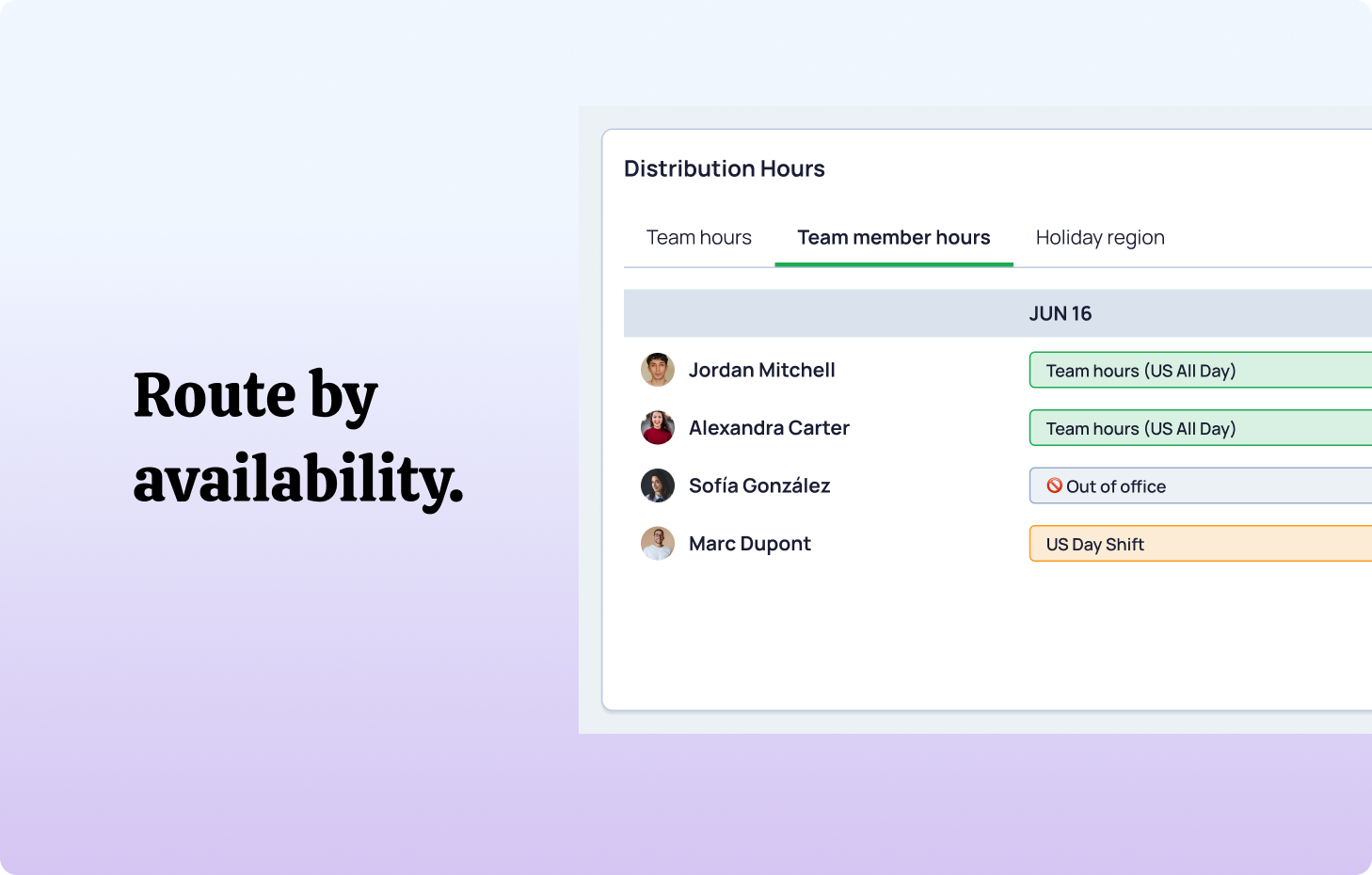
Availability-aware routing.
Availability-driven routing delivers three measurable outcomes:
Speed: Eliminating assignment delays protects speed-to-lead - one of your primary levers for conversion.
Reliability: Predictable fallback logic prevents stalled leads when entire regions are offline, maintaining business continuity.
Equity: Balanced workload distribution during regional downtime maintains team capacity and morale.
These benefits only materialize when your system reflects actual working patterns across geographies and adapts as those patterns shift.
Why regional availability matters more than most teams acknowledge.
Unfortunately the leads and cases you generate aren’t aware of your staffing calendar. And they convert or get resolved based on response velocity, not routing complexity.
Native Salesforce assignment rules provide some structural capabilities but they lack operational intelligence. They can't check whether a rep is working today, account for time zone differences, or adapt to regional office hours and national holidays.
The Operational Cost:
- Delayed follow-up directly impacts conversion rates
- Uneven workload creates capacity imbalances across teams
- Manual exception handling (aka admin-heavy firefighting)
- SLA breaches accumulate for entirely preventable reasons
- Frustrated customers with unresolved enquiries or cases.
360Learning's results validate this: reducing lead response time to under 10 minutes through availability- and capacity-aware routing lifted conversions 40%. Holiday-aware logic applies the same principle to a common, predictable trigger: is the rep available to work today?
How do you build it?
Most teams assume holiday handling requires custom Apex or complex Flow orchestration. It doesn't.
Effective holiday routing requires three operational layers:
1. Reliable holiday & availability tracking.
This can be a public calendar integration, PTO scheduling system, or native Salesforce records that capture holiday dates, working days, and regional office hours.
NC Squared's Distribution Engine reads directly from Salesforce Calendar. Teams can log PTO, public holidays, and shift schedules directly here, or through an integration with Microsoft or Google calendars.
Distribution Engine then gives reps control their own availability through a widget that shows up in their Salesforce, creating real-time visibility without external dependencies. The system accounts for time zone variations and regional working hours automatically.
2. Real-time availability verification.
This is the capability that out-of-the-box assignment rules don't provide.
Routing engines must verify availability at the moment of assignment - not when the rule was configured - ensuring inbound leads never land with offline reps during holiday season peaks or regional closures.
3. Multi-tier fallback logic.
When an entire region is unavailable, leads must route intelligently to alternate coverage.
EMEA offline → route to US.
APAC offline → route to ANZ, then global pool.
Fallback architecture protects speed-to-lead (your competitive advantage) while maintaining business continuity across time zones.
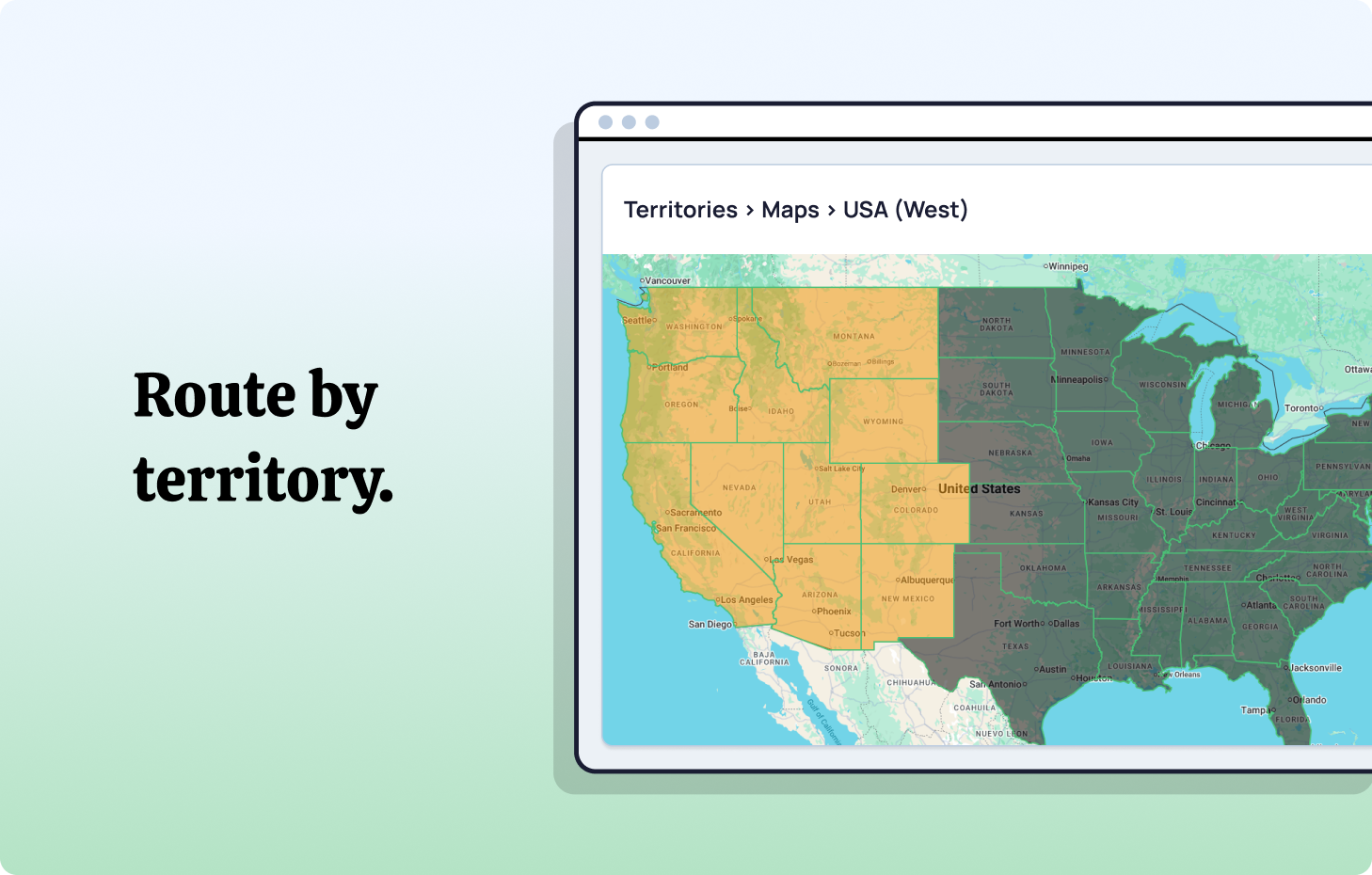
The trade-offs.
Precision vs. Maintainability
You can build intricate matrices combining region, holiday, skill, segment, and capacity.
But ICP research consistently shows RevOps and Admin teams value clarity and auditability over maximal automation. A simple workflow you can maintain outperforms a "perfect" rule that breaks under its own complexity.
Workload Equity vs. Regional Alignment
Holiday routing temporarily redistributes assignment volume.
This is why leading teams combine holiday rules with capacity thresholds - Distribution Engine supports caps, weights, and active-load limits to prevent overwhelming alternate teams during regional downtime.
Standardization vs. Local Nuance
Some organizations require one global ruleset. Others need regional customization with specific templates for different geographies.
Customer interviews highlight consistent demand for self-serve editing capabilities and safe testing environments - enabling teams to validate changes before production deployment.
Implementation framework.
Define regional segments
Keep segmentation simple: US, EMEA, APAC, ANZ, LATAM.
Complexity multiplies maintenance burden exponentially. Account for time zone differences and regional working hours when establishing segments.
Establish holiday calendar management
Store regional holidays as Salesforce records or calendar entries that capture national holidays, regional closures, and holiday dates for each geography.
Distribution Engine's availability module integrates PTO entries and holiday logic into routing decisions automatically, eliminating external dependencies on third-party service providers.
Configure availability-based assignment
Routing logic should verify four conditions at assignment:
- Is the rep currently online? (manual toggle or automated)
- Is today a regional holiday for their location?
- Are they within capacity thresholds?
- Do they possess required skills, territory access, and licensing?
All four checks are natively supported in Distribution Engine through its availability system, territory classifier, tag-based skills matching, and capacity management. The API enables integration with external systems when needed.
Build fallback pools for regional downtime
Simple conditional branching ensures leads continue flowing when primary teams are unavailable.
Fallback pools maintain conversion velocity during predictable coverage gaps. Configure notifications for managers when fallback routing activates, enabling proactive workflow adjustments.
Test against real holiday schedules
Simulate routing for past and upcoming holidays, including edge cases during the holiday season.
Distribution Engine's sandbox-safe testing, comprehensive logging, and auditability reflect what ICP research identifies as critical: predictability and operational oversight. Use templates to standardize testing protocols across regions.
Monitor performance continuously
Track leading indicators through your metrics dashboard:
- SLA adherence rates
- Time-to-first-action
- Reassignment frequency
- Workload distribution balance
- Customer experience scores
Distribution Engine logs every assignment as a native Salesforce record, enabling standard dashboards and coaching workflows without custom reporting infrastructure. Include troubleshooting protocols for when routing anomalies appear.
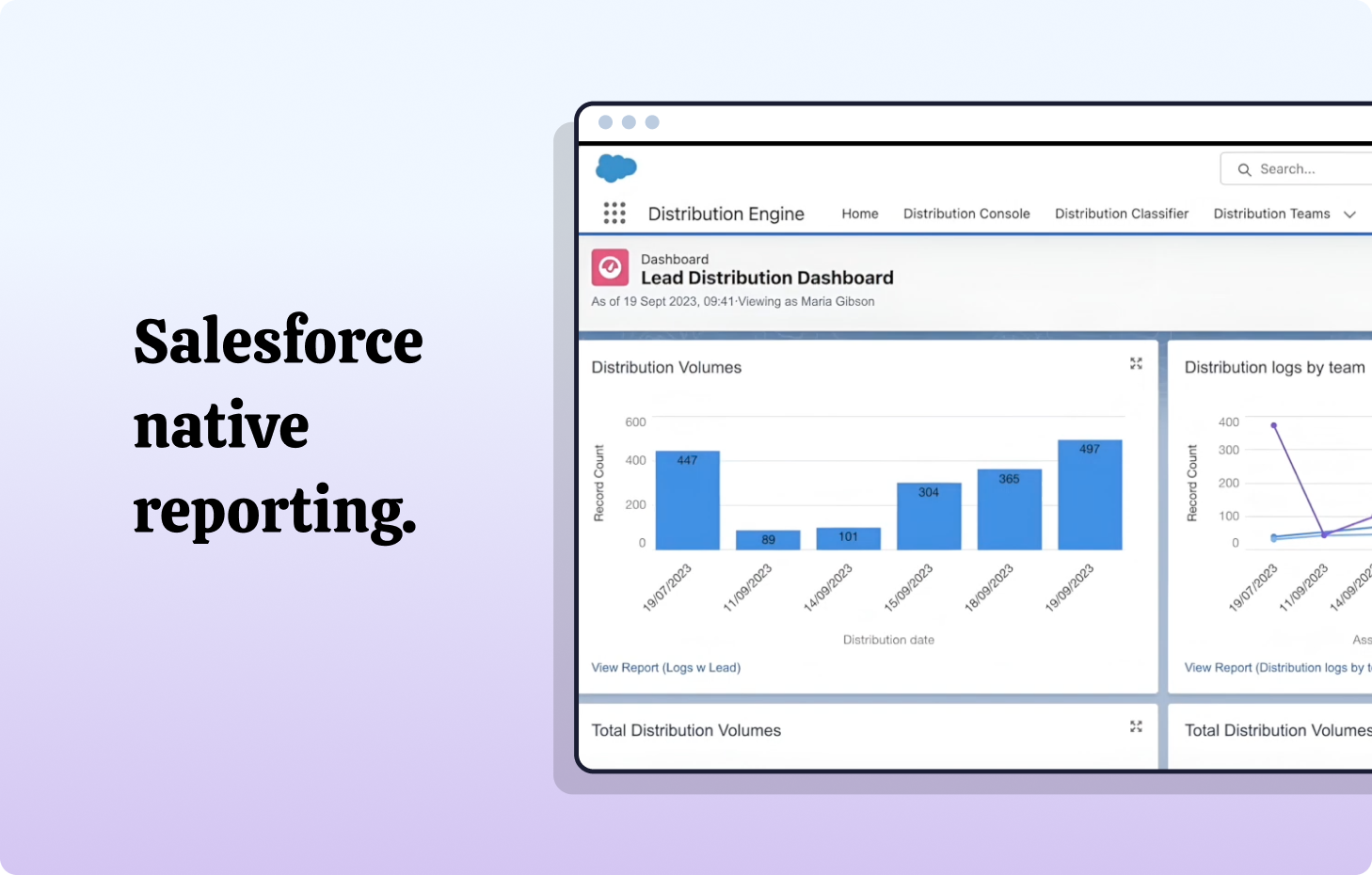
The architecture that works.
Holiday-aware routing represents a category of edge cases where brittle rules fail quickly.
Distribution Engine addresses these scenarios through architectural design:
Dynamic Availability Management: Reps toggle online/offline from native Salesforce widgets; managers maintain real-time coverage visibility across time zones and office hours.
Multi-Dimensional Assignment Logic: Holiday routing complexity multiplies when combined with regulated territories (US state licensing requirements). Distribution Engine's territory classifier and tag system were purpose-built for this layered complexity.
Capacity-Aware Distribution: Active caps, daily limits, weights, and load-balancing maintain equity without sacrificing response velocity.
SLA-Based Auto-Reassignment: When leads sit untouched - whether due to holidays, meetings, or forgotten offline toggles - automatic reassignment triggers. This capability drives the conversion improvements validated in multiple customer implementations, including 360Learning's sub-10-minute SLA performance.
Fully Native Architecture: No integration latency, no external data egress, no sync failures - critical for RevOps leaders already managing excessive tool sprawl, as highlighted consistently in ICP research.
Implementation Checklist.
- Map active regional segments with time zone coverage
- Import or record holiday calendars with national holidays and working days
- Configure rep availability rules including office hours
- Layer capacity and skills logic
- Establish regional fallback pools
- Set up notifications for fallback activation and routing anomalies
- Create workflow templates for testing
- Test against past and upcoming holiday schedules
- Implement weekly metrics dashboard reviews
The Bottom Line.
Holiday-related routing failures show up immediately in conversion metrics: slower responses, missed SLAs, preventable capacity imbalances, and degraded customer experience.
A thoughtful architecture - combining availability awareness with intelligent fallback logic - delivers faster lead response, better regional coverage, and more reliable conversion performance while ensuring business continuity across global operations.
Because healthy pipelines aren't built on manual exception handling. They're built on systems that route intelligently around predictable human patterns.
Fancy giving Distribution Engine a try?
Have a play around for free, or get in touch if you’d prefer to chat.
Take us for a spin with a 30 day Free Trial
Have a play around for free, or get in touch if you’d prefer to chat.
%20dark.avif)