
Salesforce Ben's AppAssessor review of Distribution Engine - check it out now!
Test it for free for 30 days or get in touch if you’d prefer to chat.
Fancy giving Distribution Engine a try?
Have a play around for free, or get in touch if you’d prefer to chat.
Self-Service vs. Sales-Managed Lead Routing: Which Model Drives Better Revenue Outcomes?
Key takeaways:
Self-service lead routing provides high initial speed but frequently leads to "cherry-picking," where reps ignore difficult leads in favor of easy wins.
Sales-managed lead routing offers high managerial control but creates significant bottlenecks that slow down lead response times.
Manual distribution models inevitably break as lead volume scales, resulting in lead leakage and skewed performance data.
Automated lead routing eliminates human bias by using data-driven logic to ensure every lead is assigned to the right rep instantly.
Implementing a tool like Distribution Engine allows RevOps teams to maintain fairness through round-robin distribution while enforcing strict response SLAs.
The shift from manual to automated governance allows sales managers to focus on coaching and strategy rather than administrative lead assignment.
For Rev Ops teams, lead routing is often treated like plumbing: you don't think about it until there's a leak in the basement and your high-intent demo requests are soaking into the floorboards.
When you're scaling sales teams, you usually hit a crossroads. You either let your sales reps "grab and go" (Self-Service) or you appoint a gatekeeper to hand-deliver opportunities (Sales-Managed).
Both feel like they solve a problem in the short term. But as any RevOps pro who has spent a Sunday night fixing Salesforce assignment rules can tell you, both models eventually break. Let's look at the trade-offs, the "cherry-picking" reality, and why the most successful teams are moving toward automated governance for their lead management.
1. The Self-Service Model: The "Grab Bag" Approach
In a self-service model, inbound leads are funneled into a common queue or a public "bucket" in your CRM. Sales reps are notified when a new lead arrives, and the fastest finger wins.
The Good
Speed: In theory, this is the fastest way to get a lead contacted. If a sales rep is hungry and sitting at their desk, that potential customer is called in seconds—optimizing for response time at the right time.
Low Admin Overhead: You don't need complex logic. You just need a queue and basic workflows.
The Bad (The "Cherry-Picking" Problem)
Self-service sounds democratic, but it rarely is. Human nature takes over. SDRs will naturally scan the queue for recognizable brand names, high-value accounts, or "hot" email domains (like enterprise .com vs. .edu) and ignore the rest. This leaves your middle-of-the-pack leads to die of old age in the queue, killing your overall conversion rates and extending your sales cycle unnecessarily.
2. The Sales-Managed Model: The "Gatekeeper" Approach
Here, a Sales Manager or Lead Coordinator manually reviews every lead and assigns it to a sales representative based on their "gut feel," current workload, or who hasn't complained about their quota lately.
The Pros
High Control: Sales leaders can ensure the best leads go to the "closers."
Contextual Accuracy: A human can spot a duplicate or a "bad" lead that a simple Salesforce or HubSpot rule might miss, considering specific needs and use cases.
The Cons (The "Bottleneck" Problem)
Managers are busy. They have 1:1s, forecast calls, and fires to put out. If a hot lead hits the system at 10:00 AM but the manager is in a meeting until noon, that lead is already cold. This sales model is the enemy of Lead Response Time and can significantly impact your go-to-market efficiency. It also creates a culture of "favors," which can damage team morale if reps feel the best opportunities are being "hoarded" for certain people.
The Operational Comparison: At a Glance
{{self-serve-vs-sales-comparison="/utility/matrix"}}
3. Why Both Models Fail at Scale
As your lead generation volume grows, the cracks in these manual models become chasms.
Lead Leakage: In the self-service model, "difficult" leads are ignored, damaging your ability to close deals with qualified prospects.
Rep Burnout: In the sales-managed model, sales reps spend too much time "lobbying" their manager for better leads instead of selling and following up with potential customers.
Reporting Nightmares: When lead distribution is manual or chaotic, it's nearly impossible for RevOps to track Sales Pipeline Efficiency with meaningful metrics. You can't tell if a salesperson is underperforming because of their skill or because they're getting the "leftover" leads with lower deal value.
4. The Better Way: Distribution Engine’s Automated Lead Routing
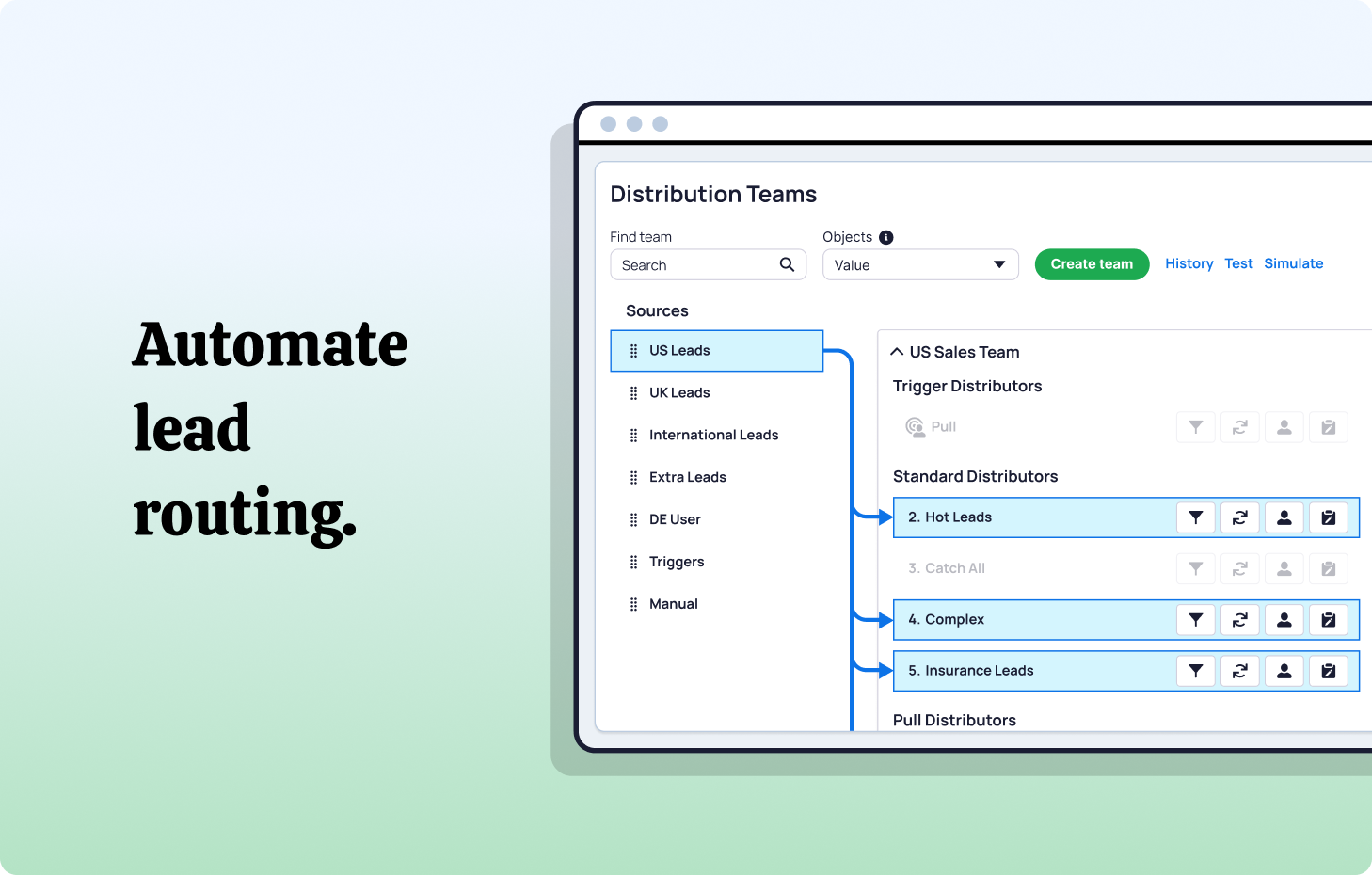
The most effective B2B lead management strategy involves moving away from "who grabbed it first" toward Automated Lead Routing. This data-driven sales approach is where tools like NC Squared's Distribution Engine come into play.
Automated routing takes the "human bias" out of the equation while maintaining the speed of self-service. Here's why it's becoming the RevOps standard for streamlining the sales process:
Round-Robin Lead Distribution: Ensures every sales rep gets an equal share of the pie, preventing the "loudest" rep from winning every time and supporting consistent revenue growth.
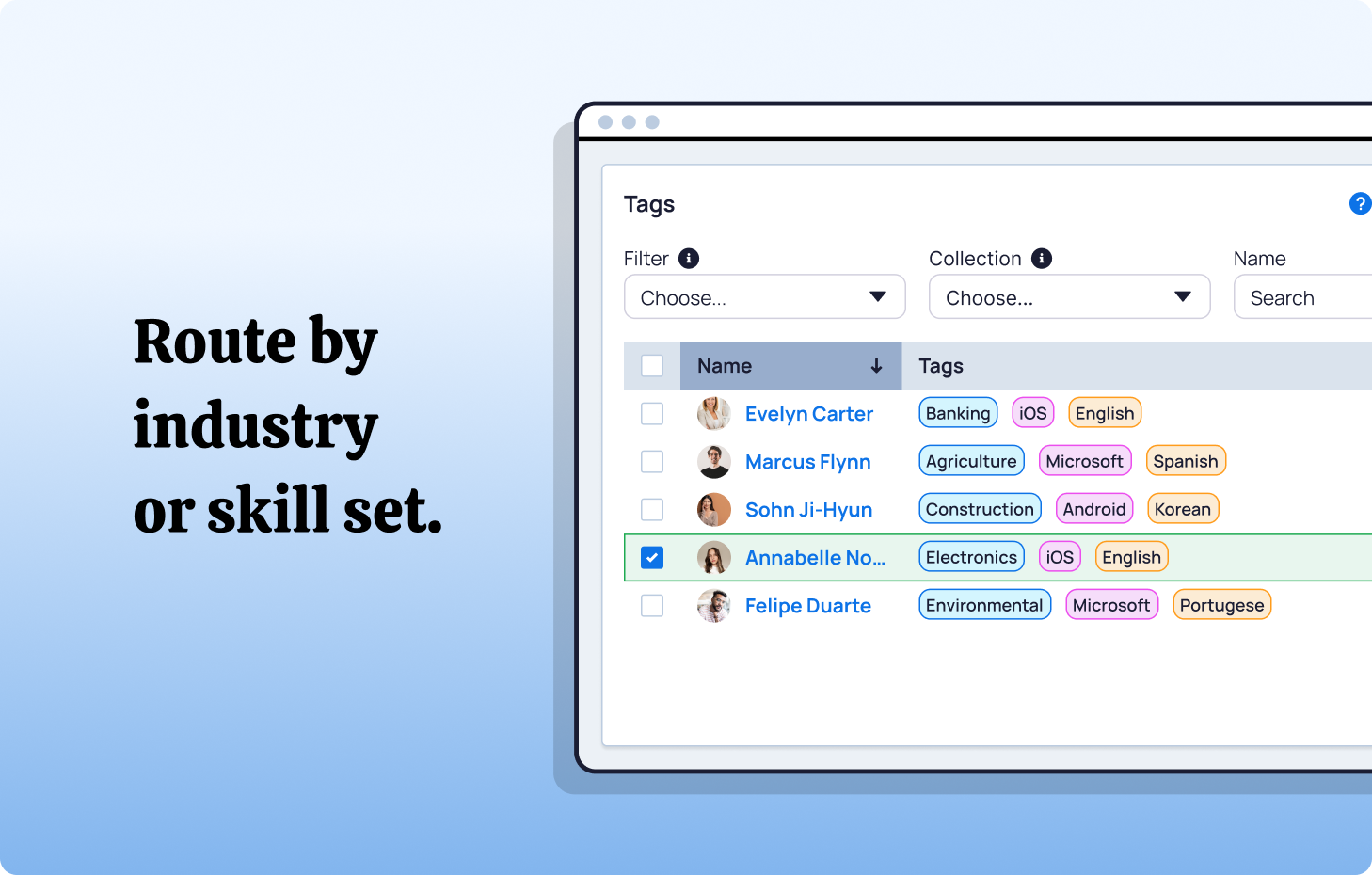
Territory-Based Routing: Automatically routes leads based on geography, industry, company size, or time zones without a manager having to lift a finger—perfect for both startups and enterprise sales teams.
SLA and Capping: If a rep hasn't touched a lead in 30 minutes, the system can automatically "re-route" it to someone else. This protects your Lead Response Time and ensures stakeholders get timely follow-up.
Weighted Distribution: Want your Senior Reps to get 60% of the high-value leads based on lead scoring and your Juniors to get 40%? You can toggle that in seconds, creating a fair playbook that supports decision-making at scale.
Take a guided tour of how easy it is to create a simple round robin in Salesforce, with our interactive demo.
5. When Should You Switch?
If you have more than 5 reps and are generating more than 100 leads a month, manual routing is likely costing you revenue.
Ask yourself:
- Do my sales reps complain about "bad leads" while others "get all the luck"?
- Is our average lead response time over 15 minutes?
- Does my Sales Manager spend more than 2 hours a week manually assigning tasks?
If the answer to any of these is "Yes," it's time to look at a Scalable Lead Routing System that can function as the backbone of your SaaS sales operation.
Conclusion: Flexibility Without the Chaos
You don't have to choose between a "Wild West" free-for-all and a "Gatekeeper" bottleneck. Modern Lead Routing Software allows RevOps to set the rules once and let the engine do the heavy lifting. This gives your managers their time back and gives your reps a fair, predictable environment where they can focus on what they do best: closing deals.
Fancy giving Distribution Engine a try?
Have a play around for free, or get in touch if you’d prefer to chat.





Take us for a spin with a 30 day Free Trial
Have a play around for free, or get in touch if you’d prefer to chat.
%20dark.avif)