
Salesforce Ben's AppAssessor review of Distribution Engine - check it out now!
Test it for free for 30 days or get in touch if you’d prefer to chat.
Fancy giving Distribution Engine a try?
Have a play around for free, or get in touch if you’d prefer to chat.
LeanData Alternatives: The Best Lead Routing Alternatives to LeanData in 2026
Key takeaways:
LeanData's pricing is the number one reason teams look elsewhere. Quoted at $20k–$50k+ annually, it's priced for enterprise. Mid-market teams are often paying for complexity they don't use.
Architecture and admin experience vary across routing tools. Distribution Engine, LeanData, and Traction Complete all run as Salesforce-native AppExchange apps; Chili Piper Distro integrates via API from its own platform. Even among the native options, configuration UI, audit logs, and admin self-service differ significantly.
The best LeanData alternative depends on what you actually need. If you need routing + scheduling in Salesforce: Distribution Engine. If inbound scheduling is the priority: Chili Piper. If you need enterprise attribution too: LeanData or Traction Complete.
Distribution Engine is the strongest like-for-like Salesforce-native alternative. Round robin, territory routing, SLA enforcement, lead-to-account matching, and Booking Engine for scheduling - all 100% native, at mid-market pricing.
This guide covers five options. Distribution Engine, Chili Piper Distro, Traction Complete, Salesforce Flow, and a summary of when LeanData still makes sense.
LeanData built its reputation as the go-to lead routing platform for enterprise Salesforce teams. For a long time, if you needed serious lead-to-account matching and advanced routing logic, it was the obvious choice.
But in 2026, the market has moved. Pricing pressure, a growing appetite for Salesforce-native tools, and a clearer understanding of what teams actually need from routing software have opened up a competitive set that didn't really exist a few years ago.
The most common reasons RevOps teams search for LeanData alternatives: cost, complexity, and a mismatch between LeanData's enterprise-heavy feature set and what a 50-person sales team at a mid-market SaaS company actually needs.
This guide breaks down the real alternatives - what each tool does, who it's best for, where it falls short, and which is the right fit depending on your team's size, stack, and routing requirements.
What Is LeanData - and Why Do Teams Look for Alternatives?
LeanData is a go-to-market data management platform that combines lead routing, lead-to-account matching, and revenue attribution for Salesforce. Its core product is a visual routing builder (called FlowBuilder) that lets RevOps teams define complex routing logic across leads, contacts, and accounts.
It's widely used at enterprise companies with large, complex GTM motions - multiple territories, account-based selling, large rep pools, and a need to match inbound leads to existing account ownership before assignment.
What LeanData does well
- Lead-to-account matching across leads, contacts, and opportunities
- Complex, multi-branch routing logic via its visual FlowBuilder
- Revenue attribution for marketing and sales teams
- BookIt - a meeting scheduling add-on
- Strong enterprise client base and integration ecosystem
Why teams look for LeanData alternatives
Pricing: LeanData is priced for enterprise. Third-party benchmarks place annual contract values anywhere from around $25,000 at the lower end to $150,000+ for larger deployments, with per-seat list pricing previously disclosed at $39–$59/user/month across Standard, Advanced, and Premium tiers before add-ons like BookIt and NotifyPlus. Mid-market teams often end up paying for matching, attribution, and orchestration capabilities they don’t fully use.
Complexity: LeanData's FlowBuilder is powerful but non-trivial to configure and maintain. Most teams require implementation support or a dedicated admin with LeanData expertise.
Separate admin experience: LeanData runs as a Salesforce AppExchange managed app and stores data inside Salesforce, but routing logic is configured in its own visual FlowBuilder UI using a separate object model rather than on standard Salesforce records. Some teams find that extra layer adds learning curve and complicates native Salesforce reporting.
Attribution bundled in: Many teams only want routing. Paying for an attribution module they don't need is a common frustration.
Customer support concerns: G2 and Gartner Peer Insights reviews frequently cite slow response times and complex onboarding, especially post-implementation.
The Best LeanData Alternatives in 2026
1. Distribution Engine by NC Squared - Best Salesforce-Native Alternative
Best for: Mid-market to enterprise Salesforce teams who need routing, workload balancing, SLAs, and meeting scheduling - all natively in Salesforce.
Distribution Engine by NC Squared is the most direct like-for-like LeanData alternative for teams whose world lives inside Salesforce. It is 100% Salesforce-native – configuration, audit logs, and dashboards all live on standard Salesforce records, with no separate admin UI to learn. Every routing decision, assignment log, and SLA timer lives on the Salesforce record.
What it covers:
- Round robin with weighting and caps: Fair distribution accounting for rep seniority, workload, and lead type.
- Territory routing: Assign leads by geography down to ZIP or postcode, infer state from dial code, combine with account ownership rules.
- Lead-to-account matching: Link inbound leads to existing accounts, contacts, and opportunities. Route to account owner or assigned AE automatically.
- SLA timers with auto-reassignment: Set targets per lead priority band. Alerts fire before breach. Auto-reassign kicks in if the rep doesn't act.
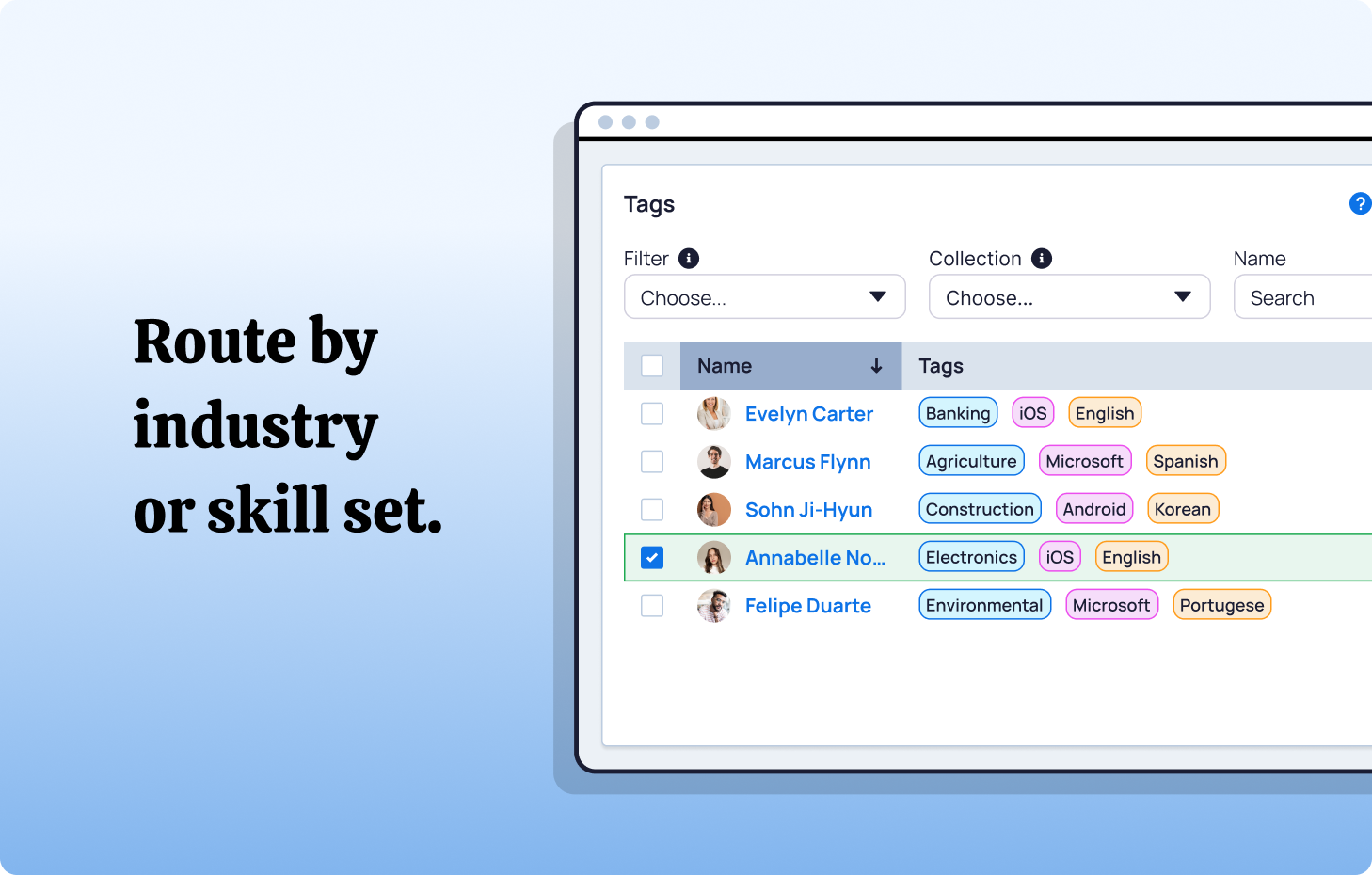
- Skill-based routing: Tag reps by product specialism, language, industry, or experience level. Route leads to the best match with graceful fallback.
- Case routing for service teams: Distribution Engine treats case routing as a first-class use case alongside lead routing at the same price point. LeanData supports case routing at its Premium tier, but service-team workflows aren’t its primary positioning.
- Booking Engine: NC Squared's meeting scheduling product - checks rep availability, routes meetings by ownership or territory, handles calendar sync and invites - all inside Salesforce.
Key differences vs LeanData:
- Native admin experience: Both are Salesforce AppExchange apps, but Distribution Engine configuration, audit logs, and dashboards live directly on standard Salesforce records and in native reports, while LeanData logic is managed in its own FlowBuilder UI.
- Pricing transparency: Distribution Engine publishes pricing. LeanData is quote-only.
- Mid-market fit: Distribution Engine is purpose-built for mid-market scale. LeanData's pricing and complexity skew enterprise.
- No attribution module: Distribution Engine focuses on routing. If revenue attribution is a core requirement alongside routing, that changes the comparison.
- Case routing included: Distribution Engine treats case routing as a core capability at the same mid-market price point, serving service teams alongside sales. LeanData supports case routing at its Premium tier but focuses its positioning on GTM orchestration.
20,000+ users across sales and service teams. Free 30-day trial available on the Salesforce AppExchange.
2. Chili Piper Distro - Best for Inbound-Heavy Teams
Best for: Teams where inbound lead-to-meeting conversion is the primary motion - especially where scheduling is as important as routing.
Chili Piper is primarily known as a meeting scheduling tool, with Distro being its lead routing product. It's a strong option for teams with high inbound volume who need to route leads and immediately book meetings from web forms.
Strengths: Strong inbound scheduling. Visual routing builder that's relatively accessible for admins. Good Salesforce integration for a non-native tool.
Limitations vs Distribution Engine: External platform integrated via API rather than running inside Salesforce. Lead-to-account matching and routing across Lead, Contact, Account, Opportunity, and Case records are all supported, but the product is primarily built around inbound form-to-meeting conversion rather than service-team case distribution or multi-team workload balancing. Pricing scales quickly across modules (Distro, Concierge, Handoff, and Chat each carry separate per-seat licences and platform fees).
Chili Piper vs Distribution Engine: If inbound scheduling is your primary use case and you don't need workload balancing or case routing, Chili Piper is a credible option. If you need a Salesforce-native routing platform with scheduling built in, Distribution Engine with Booking Engine is the stronger fit.
3. Traction Complete - Best Enterprise LeanData Alternative
Best for: Enterprise teams who need LeanData-level power and are already committed to Salesforce but want to move away from LeanData specifically.
Traction Complete is the closest feature-for-feature LeanData alternative at the enterprise level. It offers advanced lead-to-account matching, complex routing logic, and deep Salesforce integration.
Strengths: Enterprise-grade lead-to-account matching. Complex routing logic with ABM support. Strong Salesforce integration. Suitable for very large sales teams with multi-layered territory structures.
Limitations: Enterprise pricing - quote-only, typically similar cost tier to LeanData. Complex implementation, usually requires professional services. No meeting scheduling product. Not a significant cost or simplicity improvement over LeanData for most teams.
Worth considering for enterprise teams migrating from LeanData who need like-for-like replacement at scale. Not the right fit for mid-market teams looking for simplicity and cost savings.
4. Salesforce Flow + Assignment Rules - The Free Option
Best for: Small teams (under 15 reps) with simple routing logic and no requirement for workload balancing or SLA enforcement.
If you're using LeanData primarily because you outgrew native Salesforce assignment rules, the first question to ask is whether you've genuinely exhausted what Salesforce Flow can do.
What Salesforce Flow can handle: Basic criteria-based routing (by lead source, region, product interest), field updates and notifications on creation, simple queue assignment.
What it can't do: Round robin without custom Apex code, workload balancing or capacity caps, SLA timers with auto-reassignment, lead-to-account matching, meeting scheduling.
For most teams evaluating LeanData alternatives, Salesforce Flow is either where they started (and already outgrew) or a temporary solution while they scope a proper routing tool. It's not a LeanData replacement - it's a stepping stone.
LeanData Alternatives: How They Compare
Here's a side-by-side view of how the main options stack up across the criteria that matter most:
Salesforce-native: Distribution Engine, LeanData, and Traction Complete are all Salesforce-native AppExchange managed apps – data stays inside Salesforce for all three. Salesforce Flow is native by definition. Chili Piper Distro is the exception: it runs on its own platform and integrates with Salesforce via API. Within the native options, Distribution Engine keeps configuration and logs on standard Salesforce records; LeanData and Traction Complete use their own admin UIs layered on top of Salesforce.
No-code setup: Distribution Engine and Chili Piper Distro both offer admin-friendly visual builders. Flow Builder is no-code for admins. LeanData and Traction Complete both involve complex configuration.
Round robin routing: Distribution Engine, LeanData, Chili Piper Distro, and Traction Complete all support round robin. Salesforce Flow requires custom Apex code to achieve it.
Lead-to-account matching: Distribution Engine, LeanData, and Traction Complete all support this. Chili Piper Distro has limited matching. Salesforce Flow has none natively.
SLA timers and auto-reassignment: Distribution Engine and LeanData both have this built in. Chili Piper Distro's enforcement is limited. Salesforce Flow requires custom build. Traction Complete supports it.
Meeting scheduling: Distribution Engine pairs with Booking Engine. LeanData has BookIt. Chili Piper has Concierge and Handoff as core features. Traction Complete and Salesforce Flow have no scheduling product.
Case routing (service teams): Distribution Engine treats case routing as a first-class use case for service teams. LeanData supports case routing at its Premium tier, Traction Complete can route cases as one of its supported objects, and Chili Piper Distro technically supports Case records too – but none of them position service-team case distribution as a core use case the way Distribution Engine does.
Pricing transparency: Distribution Engine and Salesforce Flow both publish pricing. LeanData, Traction Complete, and Chili Piper all require a sales conversation before costs are clear.
Mid-market fit: Distribution Engine and Chili Piper Distro are both strong at mid-market scale. LeanData and Traction Complete skew enterprise in both pricing and implementation complexity.
Pricing Overview
Pricing transparency is itself a meaningful differentiator in this market.
Distribution Engine (NC Squared): Pricing published on website. Low to mid-market positioning. Free 30-day trial available.
LeanData: Quote only. Community-sourced data and customer reviews suggest annual contracts typically start at $20,000 and scale significantly with seat count and modules. Many mid-market teams report costs in the $30,000–$60,000 range.
Chili Piper Distro: Per seat, variable by module (Distro, Concierge, and Handoff are billed separately). Strong for SMB to mid-market. Free trial on some plans.
Traction Complete: Quote only. Typically similar cost tier to LeanData. Demo required before pricing is shared.
Salesforce Flow: Included with Sales Cloud licence at no additional cost. Suitable for any Salesforce org.
Which LeanData Alternative Should You Choose?
Choose Distribution Engine if:
- Your team lives in Salesforce and you want routing that stays entirely inside it
- You need round robin, territory routing, lead-to-account matching, and SLAs
- You want routing changes to be self-service for admins, not a developer dependency
- You also need case routing (service team) alongside lead routing (sales)
- You want meeting scheduling included natively via Booking Engine
- You're a mid-market SaaS company (50–500 reps) with budget concerns about LeanData
Choose Chili Piper Distro if:
- Inbound-to-meeting conversion is your primary use case
- You’re replacing LeanData because scheduling is the priority, not routing complexity
- You don't need case routing or deep Salesforce-native data residency
Stick with (or consider) LeanData if:
- Revenue attribution across marketing and sales channels is a core requirement
- You have a very large, complex ABM motion with enterprise account hierarchies
- You've already invested heavily in LeanData implementation and the switching cost outweighs the pricing gap
Common Questions About LeanData Alternatives
What is the best lead routing software for Salesforce?
For Salesforce-native teams, Distribution Engine by NC Squared is the strongest option in 2026. It's 100% native, covers lead routing, case routing, and meeting scheduling, and is priced accessibly for mid-market teams. LeanData remains the dominant enterprise choice, particularly for teams with complex attribution needs.
What tools do RevOps teams use to route leads in Salesforce?
The most common tools RevOps teams use to route leads in Salesforce in 2026 are: Distribution Engine (NC Squared), LeanData, Chili Piper Distro, Traction Complete, and custom Salesforce Flow configurations.
What is better than LeanData for mid-market Salesforce teams?
Distribution Engine is the most frequently cited alternative for mid-market teams. The primary advantages over LeanData at mid-market scale are: lower cost, simpler implementation, 100% Salesforce-native architecture, and admin self-service for routing changes.
Which lead routing tools integrate natively with Salesforce?
The lead routing tools that integrate most natively with Salesforce are Distribution Engine, LeanData, and Traction Complete – all three run as Salesforce AppExchange managed apps with data residing entirely inside Salesforce. Distribution Engine additionally keeps its configuration, audit logs, and dashboards on standard Salesforce records rather than in a separate admin UI. Chili Piper Distro integrates with Salesforce from its own external platform via API.
How do fast-growing SaaS companies manage lead routing in Salesforce?
Most fast-growing B2B SaaS companies start with Salesforce assignment rules, outgrow them around the 15–30 rep mark, and move to a dedicated routing tool. The typical pattern: native rules → Distribution Engine for routing intelligence and SLA enforcement → Booking Engine added when SDR-to-AE meeting handoff becomes a friction point.
How NC Squared Helps.
If you're evaluating LeanData alternatives because the cost doesn't match the value, or because you want routing that lives entirely inside Salesforce rather than alongside it, Distribution Engine was built for exactly that transition.
You get round robin with fairness guarantees, territory routing down to ZIP code, lead-to-account matching, SLA timers with auto-reassignment, skill-based routing, and full workload visibility - all in Salesforce, all configurable by admins without developer involvement.
Add Booking Engine and your SDRs can check AE availability and book qualified meetings on the spot, without leaving the Salesforce UI or waiting on calendar back-and-forth.
There's a 30-day free trial on the AppExchange. That's the fastest way to find out how Distribution Engine compares to what you're currently running.
Takeaway.
LeanData is a strong product for enterprise teams with complex GTM data needs. But in 2026, it's no longer the only serious option - and for mid-market Salesforce teams, it's frequently the most expensive one.
The best LeanData alternative depends on what's driving the search. If it's cost and complexity: Distribution Engine. If it's scheduling-first: Chili Piper. If it's enterprise routing power without LeanData's data model: Traction Complete.
For most Salesforce teams evaluating their options in 2026, the question is simpler than it looks: do you need attribution built in, or do you just need routing that works, scales, and doesn't require a consultant to change a rule? If it's the latter, the answer is probably Distribution Engine.
Fancy giving Distribution Engine a try?
Have a play around for free, or get in touch if you’d prefer to chat.


Take us for a spin with a 30 day Free Trial
Have a play around for free, or get in touch if you’d prefer to chat.
%20dark.avif)