
Salesforce Ben's AppAssessor review of Distribution Engine - check it out now!
Test it for free for 30 days or get in touch if you’d prefer to chat.
Fancy giving Distribution Engine a try?
Have a play around for free, or get in touch if you’d prefer to chat.
What Is Lead Scoring? A Complete Guide to Models, Thresholds & B2B Examples
Key takeaways:
Why Lead Scoring Actually Matters Sales and marketing teams stop arguing about lead quality when they're both working from the same scoring playbook that surfaces high-intent prospects and defines "qualified" in a language everyone understands.
The Mechanics Behind the Score Each lead gets a numerical value based on fit criteria (industry, company size, role) and engagement signals (downloads, demo requests), and when that combined score crosses your threshold, it automatically becomes an MQL and lands in sales' queue.
Four Approaches to Scoring Models You've got demographic (fit-based), behavioral (engagement-based), predictive (AI-driven), and hybrid models - with most teams landing on hybrid because it balances automation with the human judgment that keeps scoring grounded in market reality.
Results That Actually Move the Needle B2B SaaS and professional services firms pairing structured scoring with NC Squared's Distribution Engine have seen conversion rates jump up to 40% while hitting 97% assignment accuracy through automated routing that ensures no lead sits idle.
Best Practices and the Pitfalls to Avoid Start simple, add negative scoring for disengaging leads, make it a cross-functional effort, review quarterly, automate assignments, fix data gaps with enrichment tools, and configure auto-reassignment so momentum never stalls when reps are swamped or out.
Bringing It All Together with Scalable Automation NC Squared's Distribution Engine handles real-time assignment, load balancing, and SLA enforcement inside Salesforce - turning lead scoring from theory into a self-improving revenue engine that continuously refines lead quality, speed-to-lead, and conversion outcomes.
Sales and marketing teams often struggle to distinguish genuine high‑intent buyers from casual browsers when they are looking at the same CRM list of names, companies, and emails. Marketing are celebrating record lead numbers, while sales teams find it hard to figure out who's actually ready to buy.
How do you spot high-intent prospects among hundreds of casual browsers?
In your CRM, every lead looks the same - a name, a company, an email. But their readiness to purchase? That varies dramatically.
Lead scoring cuts through this noise. It helps RevOps & sales teams prioritize effectively & focus resources where they'll make the biggest impact.
& when you pair lead scoring with intelligent lead routing solutions like NC Squared's Distribution Engine, you get a complete revenue acceleration system that automatically sends high-value prospects to the right rep in real-time - all within Salesforce.
Why Lead Scoring matters.
Here's the real issue behind most marketing-sales disconnects: there's no shared framework for measuring lead quality.
Without standardized scoring, sales reps rely on gut feeling. One rep thinks a lead is hot. Another disagrees. The result? Delayed follow-ups, missed opportunities, & team friction.
Lead scoring creates a common language. It gives you clear criteria for which prospects need immediate attention, which need nurturing, & which don't fit your target profile at all.
Our research with RevOps leaders shows that successful adoption isn't just about automation - it's about predictability & transparency. Teams need visible rules, comprehensive audit trails, & enforceable SLAs to trust their scoring & lead routing processes.
Without a structured scoring system, teams face the classic challenges of manual lead scoring: inconsistent qualification, slow handoffs between marketing and sales, and wasted rep time on low-fit prospects who were never likely to convert.
How Does Lead Scoring Work?
Lead scoring works by assigning numerical point values to each lead based on two dimensions: how well they match your ideal customer profile (fit scoring) and how actively they are engaging with your brand (behavioural scoring). These points accumulate into a total score, and when that score crosses a predefined threshold - typically between 60 and 80 points - the lead is classified as a Marketing Qualified Lead (MQL) and handed off to sales for follow-up.
The process relies on combining explicit data (job title, company size, industry) with implicit signals (page visits, email engagement, content downloads). The more closely a lead’s profile and behaviour resemble your existing customers, the higher their score - and the faster they should reach a sales rep.
This is where intent signals improve lead scoring accuracy. A lead who visits your pricing page twice and downloads a competitor comparison guide is demonstrating purchase intent that goes beyond demographic fit alone. Modern scoring models weight these high-intent behaviours heavily, ensuring that leads showing active buying signals are prioritised over those who simply match your firmographic criteria.
Understanding Lead Scoring.
Lead scoring is a systematic method of ranking prospects by assigning numerical point values to their demographic attributes and behavioural actions to determine their likelihood of converting into a paying customer. Each lead gets a numerical value that reflects two things: how well they match your ideal customer profile & how engaged they are with your company.
Effective scoring looks at two key dimensions:
Fit (Explicit Scoring): How closely does this lead match your target criteria? Think industry, company size, role, budget authority, and geographic location.
Engagement (Implicit Scoring): How much have they interacted with your brand? Content downloads, email opens, demo requests, pricing page visits, webinar attendance, and repeat site visits - these all tell a story.
Together, these dimensions give you a clear picture of purchase intent.
Here's an example: A VP of Sales from a target industry who downloads your pricing page? High-value opportunity. A student with a personal email browsing your blog? Probably not buying anytime soon.
Lead scoring helps you spot these differences instantly.
Common Lead Scoring Models
Lead scoring models are the frameworks organisations use to assign point values and determine which leads are most likely to convert. Most B2B teams adopt one of four approaches, depending on their data maturity, team size, and tech stack.
1. Demographic Scoring (Fit-Based)
Demographic scoring evaluates leads based on static attributes such as job title, company size, industry, annual revenue, and geographic location. This model answers the question: does this lead match our ideal customer profile?
2. Behavioural Scoring (Engagement-Based)
Behavioural scoring prioritises engagement and intent signals over firmographic data. It tracks actions like email opens, content downloads, webinar registrations, pricing page visits, and demo requests to measure how actively a prospect is interacting with your brand.
3. Predictive Scoring (AI-Driven)
Predictive lead scoring uses machine learning algorithms to analyse historical conversion data and identify patterns that indicate which leads are most likely to close. Unlike manual scoring models, predictive systems continuously learn from new outcomes and adjust scores automatically - making them particularly effective for organisations with large datasets and complex sales cycles.
4. Hybrid Scoring (Combined Approach)
Hybrid scoring combines demographic fit with behavioural engagement signals, giving teams a complete picture of both who the lead is and how interested they are. This is the most common approach for B2B SaaS and enterprise sales teams because it balances automated data analysis with the human judgment needed to account for market nuances.
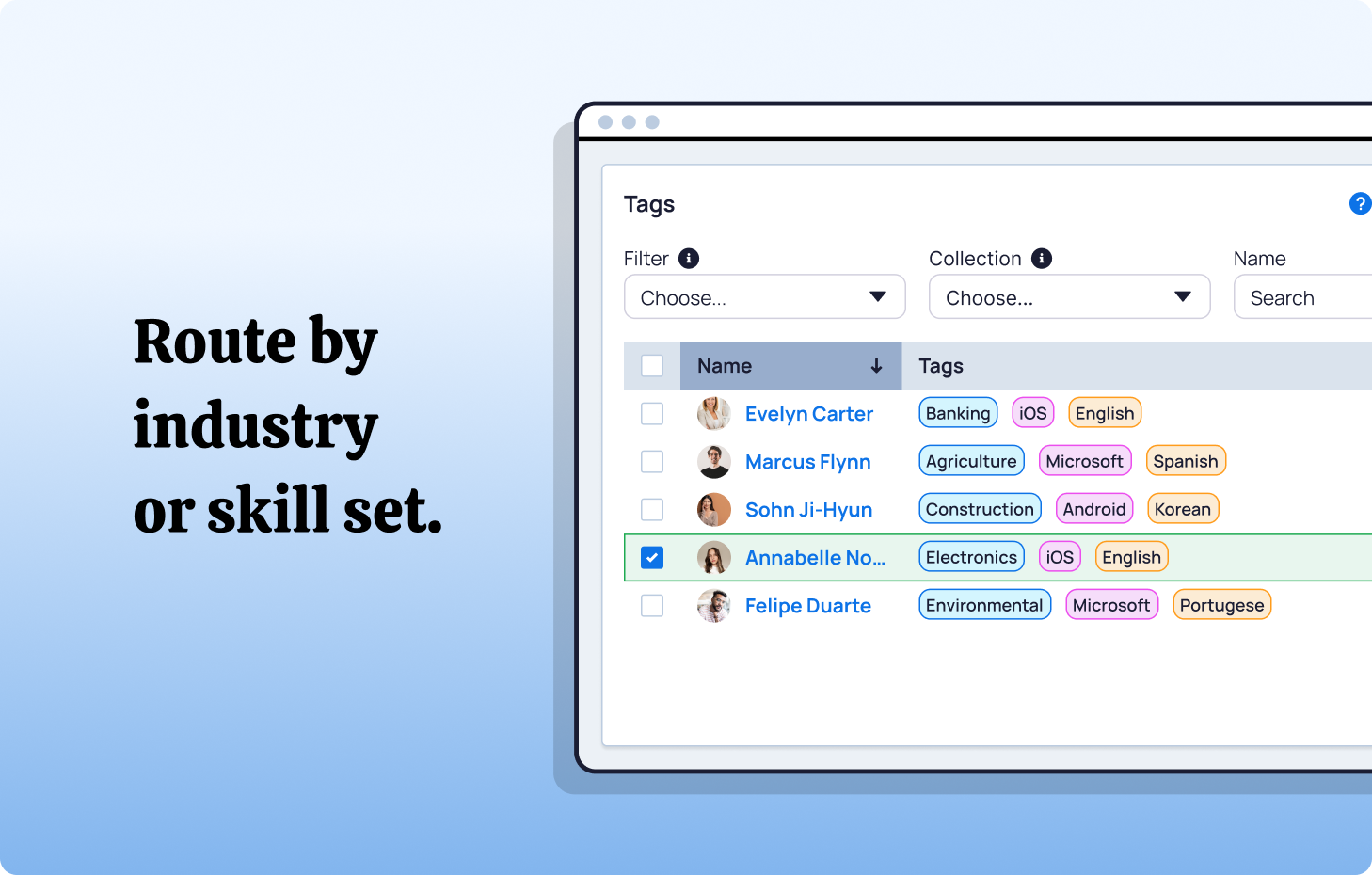
NC Squared customers typically use hybrid approaches. They work well with structured Salesforce workflows while still allowing for human judgment & adjustment.
Lead Scoring Thresholds & MQL Handoff
Operationally, teams assign point values to specific attributes and behaviours, then set a threshold at which a lead becomes an MQL. In most B2B organisations, the MQL threshold falls between 60 and 80 points, though enterprise sales teams with longer cycles often set thresholds higher - around 75 to 100 points - to ensure only the most sales-ready leads are handed off.
NC Squared customers typically use hybrid approaches. They work well with structured Salesforce workflows while still allowing for human judgment & adjustment.
Lead Scoring in practice
Operationally, teams assign point values to specific attributes and behaviors, then set a threshold at which a lead becomes an MQL. A simplified example might look like this:
{{blog-what-is-lead-scoring-1="/utility/matrix"}}
When a lead's score crosses your threshold (usually 60-80 points), they become a Marketing Qualified Lead (MQL) & get handed off to sales.
But here's where many teams hit a wall: manual assignment creates bottlenecks. Response times lag, momentum dies, & conversion rates drop.
That's why leading organizations combine lead scoring with automated lead routing. NC Squared's Distribution Engine handles this seamlessly within Salesforce, instantly assigning leads based on territory, capacity, or specialization - while maintaining fairness rules & SLA compliance.
Real-world Lead Scoring.
The following B2B lead scoring examples show how different organisations apply scoring models in practice - with specific criteria, point values, and outcomes.
Example 1: B2B SaaS Company
A cloud software provider targeting IT Directors at mid-market companies built this framework:
- +25 points for Director-level or above
- +15 points for companies with 200–1,000 employees
- +10 points for pricing page visits
- +20 points for demo bookings
- -10 points for 30+ days without engagement
The result? Leads over 60 points get routed to account executives within minutes. 360 Learning saw a 40% increase in conversion rates & 97% assignment accuracy using this approach with Distribution Engine.
Example 2: Professional Services Firm
A consulting firm prioritizes outreach using engagement-based scoring:
- +20 points for relevant job roles
- +15 points for proposal downloads
- +10 points for repeat site visits
- -10 points for email bounces
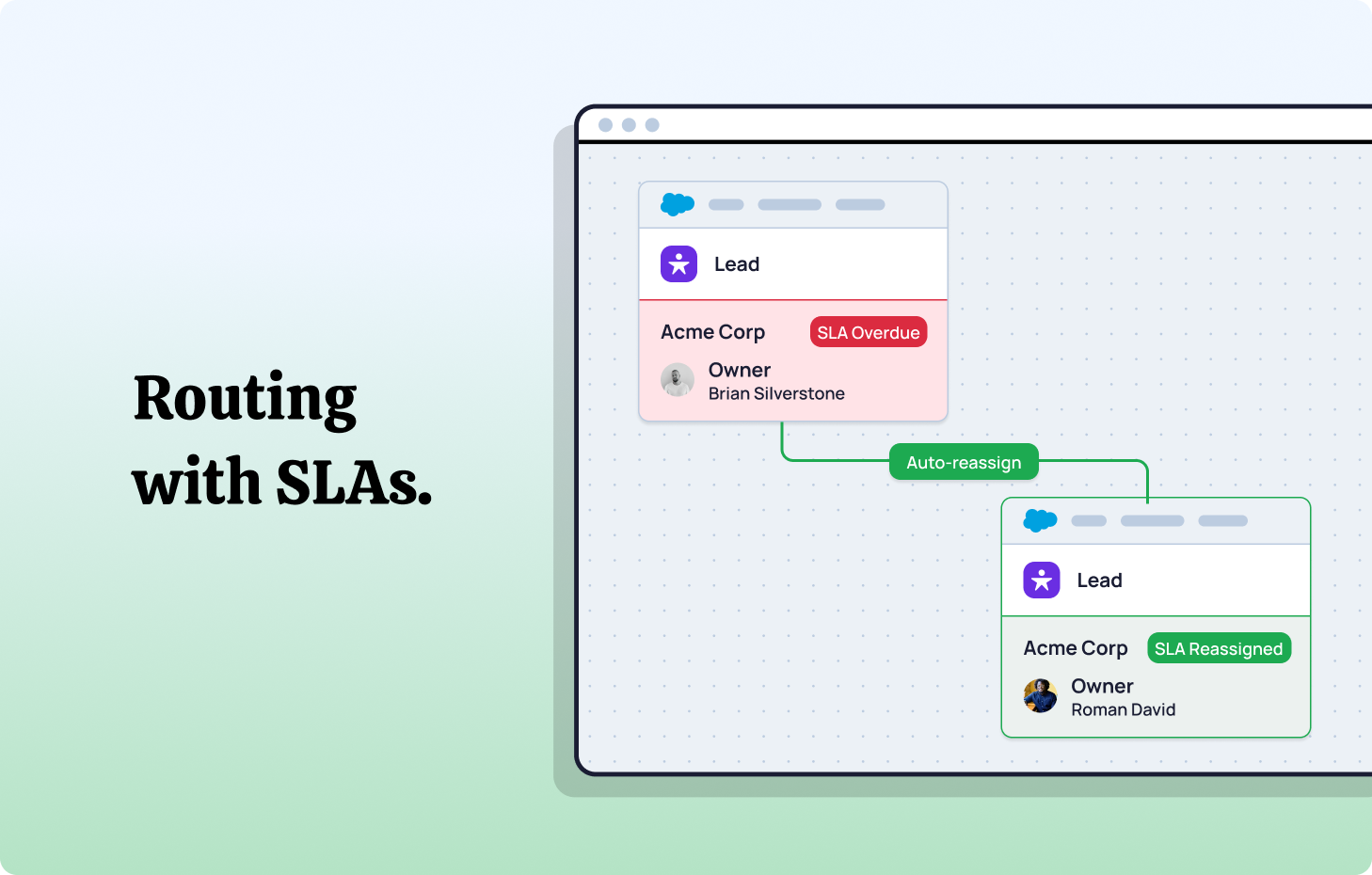
The result? Their CRM automatically reassigns unworked leads after 48 hours - a capability built right into Distribution Engine's SLA-based workflows.
Example 3: Enterprise Technology Vendor
A B2B enterprise software company selling to C-suite buyers at companies with 1,000+ employees uses a hybrid scoring model with elevated thresholds:
- +30 points for C-level title (CTO, CIO, VP Engineering)
- +20 points for companies with 1,000+ employees in target verticals
- +25 points for attending a product demo or webinar
- +15 points for downloading a technical whitepaper or ROI calculator
- +10 points for visiting the case studies page
- -20 points for no engagement in 45+ days
With a threshold set at 80 points, only highly qualified leads reach senior account executives. Leads scoring 50–79 enter an automated nurture sequence, while those below 50 are deprioritised. This tiered approach ensures enterprise reps spend their time on opportunities with genuine buying intent.
Lead Scoring Best Practices
Effective lead scoring requires more than setting up point values. These best practices address the most common reasons B2B lead scoring implementations fail - from overcomplicating the initial model to neglecting the sales-marketing feedback loop.
Here's how to avoid the common pitfalls:
Start simple: Begin with fewer than 10 scoring criteria. Teams that overengineer their first model typically abandon it within two quarters because maintenance becomes unsustainable.
Include negative scoring: Account for disengagement signals. Leads who unsubscribe, bounce, or go inactive for 30+ days should have points deducted automatically so your sales team isn’t chasing cold prospects.
Collaborate across teams: Build your model with input from sales. The most common reason lead scoring fails is that sales doesn’t trust the scores marketing produces - and that distrust almost always stems from a lack of shared input during model design.
Review regularly: Audit your thresholds & weights quarterly. Market conditions change, buyer behaviour evolves, and your product offering may shift. A scoring model calibrated 12 months ago may no longer reflect who your best prospects are today.
Automate assignment: Don’t let high-value leads sit idle. Connect your scoring engine to automated routing so that the moment a lead crosses your MQL threshold, they’re assigned to the right rep based on territory, capacity, or specialisation - without manual intervention.
Aetna eliminated 8 hours of daily manual case assignment work by implementing automated lead routing in salesforce through Distribution Engine - proof that proper automation delivers real operational impact.
Challenges of Manual Lead Scoring
Manual lead scoring creates several operational problems that compound as teams grow. Without automation, scoring becomes inconsistent across reps, handoffs are delayed, and high-value leads go cold before they reach the right person.
{{blog-what-is-lead-scoring-2="/utility/matrix"}}
The key to success? Clear ownership of the feedback loop. RevOps teams can handle this through comprehensive dashboards & audit logging.
Where does Distribution Engine fit in?
Scoring identifies priority leads. But execution determines outcomes.
When multiple high-value leads come in at once, you need intelligent distribution logic. Distribution Engine solves this within Salesforce:
- 100% Salesforce-native – Your data never leaves the platform
- Real‑time assignment: Routing by territory, availability, capacity, or specialization immediately when a lead crosses an MQL threshold.
- Capacity‑aware load balancing: Caps and weighting logic that spread work fairly while still prioritizing experienced reps or key skills.
- SLA enforcement and reassignment: SLA timers that trigger reminders and, if needed, automated reassignment when time limits are exceeded.
- Full visibility: Dashboards and logs that surface speed‑to‑lead metrics, ownership, and routing decisions inside Salesforce.
After implementing Distribution Engine, Tebra saw 95% improvement in assignment accuracy & 30% higher lead conversion rates.
Balancing complexity & maintainability.
The best scoring models balance sophistication with sustainability. At NC Squared, we emphasize transparency, control, & auditability - qualities RevOps leaders consistently value over pure automation.
Remember: your ideal customer profile will evolve. Lead scoring requires continuous refinement. The goal isn't immediate perfection - it's consistent improvement.
How to implement Lead Scoring within your business.
- Step 1: Document your ICP - Define target roles, company sizes, industries, regions, and disqualifying factors.
- Step 2: Identify high-value engagement signals - Flag actions that historically correlate with pipeline and revenue, such as demo requests, pricing page views, webinar attendance, and case study downloads.
- Step 3: Assign point values and thresholds - Set initial scores for attributes and behaviours and define MQL/SQL thresholds based on best judgment and available data. Start with a threshold between 60 and 80 points, and adjust based on conversion data after the first quarter.
- Step 4: Align definitions with sales - Ensure sales leadership agrees on what MQL and SQL mean in practice and how quickly each should be worked.
- Step 5: Implement automated routing and SLAs - Use Distribution Engine to connect scoring with capacity- and territory-aware assignment and SLA-based reassignment in Salesforce.
- Step 6: Run regular reviews - Monitor speed-to-lead, distribution fairness, and conversion by score band, then adjust scores, thresholds, and routing rules based on what the data shows.
- Start focused & automate early. That’s how organisations like 360 Learning achieve sub-10-minute lead response times & 40% conversion improvements.
Start focused & automate early. That's how organizations like 360 Learning achieve sub-10-minute lead response times & 40% conversion improvements.
Key takeaway.
Lead scoring is more than just numbers - it's about strategic focus. For RevOps teams, it transforms raw data into actionable intelligence & converts time into revenue.
When you combine it with Salesforce-native automation through NC Squared's Distribution Engine, lead scoring evolves from a theoretical framework into a revenue acceleration engine.
Whether you’re building your first scoring model or refining an existing one, the principles remain the same: start with clear fit and engagement criteria, set thresholds your sales team trusts, automate the handoff, and review quarterly. The organisations that treat lead scoring as a living system - not a one-time setup - are the ones that see sustained improvements in speed-to-lead, conversion rates, and revenue predictability.
Frequently Asked Questions About Lead Scoring
What is lead scoring?
Lead scoring is a systematic method used by B2B sales and marketing teams to rank prospects by assigning numerical point values to their demographic attributes (such as job title, company size, and industry) and behavioural actions (such as email engagement, content downloads, and demo requests). The total score indicates how likely a lead is to convert into a customer, helping teams prioritise their outreach and allocate resources effectively.
How does lead scoring work in Salesforce?
In Salesforce, lead scoring can be implemented through native tools like Einstein Lead Scoring (which uses AI to analyse historical conversion data), custom fields and automation rules in Flow Builder, or third-party solutions like NC Squared’s Distribution Engine that combine scoring with automated lead routing. The scoring model assigns points to lead fields and activities, and when a lead’s score crosses the MQL threshold, automation triggers assignment to the appropriate sales rep based on territory, capacity, or specialisation.
What is the difference between fit scoring and behavioural scoring?
Fit scoring (also called explicit or demographic scoring) evaluates whether a lead matches your ideal customer profile based on static attributes like job title, industry, company revenue, and location. Behavioural scoring (also called implicit or engagement scoring) measures what actions a lead has taken - such as visiting your pricing page, attending a webinar, or requesting a demo. Most effective lead scoring models combine both dimensions into a hybrid approach that captures who the lead is and how interested they are.
What is predictive lead scoring?
Predictive lead scoring uses machine learning algorithms to analyse historical CRM data - including which leads converted and which didn’t - to automatically identify the attributes and behaviours that correlate most strongly with closed deals. Unlike rule-based models where teams manually assign point values, predictive models learn from outcomes and adjust scores dynamically, often surfacing patterns that human analysts would miss. Predictive scoring is particularly effective for organisations with large datasets and complex, multi-touch sales cycles.
How often should you update your lead scoring model?
Most B2B organisations should review and adjust their lead scoring model quarterly. During each review, compare MQL scores against actual closed-won outcomes to identify where the model is accurately predicting conversions and where it’s drifting. Key signals that your model needs recalibration include declining MQL-to-opportunity conversion rates, sales reps consistently overriding scores, or changes in your product offering, target market, or competitive landscape.
What are the biggest challenges of manual lead scoring?
The most common challenges of manual lead scoring include inconsistent qualification criteria across reps, delayed handoffs between marketing and sales, wasted sales time on low-fit leads, model drift as buyer behaviour changes, and the absence of a closed-loop feedback mechanism. These problems compound as teams scale - which is why most organisations eventually move toward automated scoring with tools that handle both the scoring logic and the subsequent lead routing within their CRM.
Fancy giving Distribution Engine a try?
Have a play around for free, or get in touch if you’d prefer to chat.





Take us for a spin with a 30 day Free Trial
Have a play around for free, or get in touch if you’d prefer to chat.
%20dark.avif)