
Salesforce Ben's AppAssessor review of Distribution Engine - check it out now!
Test it for free for 30 days or get in touch if you’d prefer to chat.
Fancy giving Distribution Engine a try?
Have a play around for free, or get in touch if you’d prefer to chat.
Inbound Lead Management: Speed & Fairness at Scale.
Key takeaways:
Speed and fairness create structural tension: Optimizing purely for response velocity enables cherry-picking, while basic round-robin assigns hot leads to offline or overloaded reps - automation resolves this without creating maintenance debt.
Three-layer architecture transforms chaos into precision: Data normalization ensures clean inputs, intelligent distribution evaluates context (weights, availability, capacity), and SLA enforcement automatically reassigns when reps don't act.
Real automation delivers measurable infrastructure gains: 360Learning achieved sub-10-minute response with 40% conversion lift, Tebra cut response time 40% with 30% higher conversions, Shutterstock saved 60 hours weekly.
Lead quality varies systematically by source: A demo request differs fundamentally from a whitepaper download - effective management segments by behavioral scoring, firmographic filtering, and source weighting before routing begins.
The constraint determines the fix: Data quality needs normalization, slow distribution needs automation, rep inactivity needs SLA enforcement - identify the biggest lever blocking conversion and address that gap first.
Revenue operations teams face a foundational challenge: transforming inbound leads from captured interest into assigned opportunity without introducing friction, delay, or inequity.
The cost of failure is immediate. High-quality leads sit in queues through weekends. Territory owners on vacation hold records nobody else can touch. Manual triage creates bottlenecks that multiply with volume.
The strategic question isn't whether to automate lead distribution - it's how to build a system that balances speed, fairness, and operational resilience.
The dual mandate.
RevOps teams operate under competing pressures that standard CRM tooling wasn't designed to resolve.
Speed to lead drives conversion rates. Responding within minutes versus hours materially impacts close rates, particularly for high-intent prospects moving through the buyer's journey.
Fair distribution protects quota attainment across your sales team. Power sellers shouldn't cherry-pick easy wins while new hires never get quality pipeline to work.
These goals conflict when systems are brittle. Optimize purely for speed using shared queues, and you enable cherry-picking. Optimize purely for fairness using basic round-robin, and you assign hot leads to reps who are off-duty or overloaded.
The solution requires automation you can trust to make consistent decisions without creating maintenance debt - ensuring qualified leads reach the right reps in real-time.
Where inbound leads come from (& why quality varies).
Before discussing lead management, it's worth understanding what drives inbound lead generation for B2B companies.
Most inbound marketing strategies rely on multiple channels working in concert. Content marketing such as SEO creates valuable content that attracts website visitors through search engines. Landing pages with clear calls-to-action convert those visitors into contacts. Lead magnets - whitepapers, webinars, case studies - exchange educational resources for contact information.
Social media platforms like LinkedIn amplify content distribution and enable thought leader positioning. Email marketing nurtures prospects through the buyer's journey with targeted messaging based on demographics and firmographic data.
The challenge: each channel produces leads with different qualification levels and intent signals.
A prospect who downloads a whitepaper differs fundamentally from someone who requests a demo. Someone who attended a webinar has higher engagement than a cold email responder. Your inbound sales process needs to account for these distinctions.
This is where lead scoring becomes essential. Effective lead gen operations tag records with behavioral and firmographic signals - what they downloaded, company size, job title, engagement frequency - before lead routing begins.
The gap many teams face: Marketing teams optimize for volume using tactics like content marketing, social media, and search engine optimization. Sales teams optimize for quality, wanting only prospects ready for conversations. RevOps sits between them, trying to bridge the disconnect.
The fix requires alignment on what constitutes a marketing qualified lead (MQL) and establishing clear handoff criteria between marketing efforts and sales follow-up. Without this definition, your routing system just moves the conflict downstream.
Lead qualification: the bridge between generation & distribution.
Not every form fill deserves immediate sales attention.
The most effective inbound marketing strategies separate lead generation from lead nurturing. High-intent leads - for example: demo requests, pricing inquiries, product qualified leads - should route immediately to sales. Lower-intent prospects - newsletter signups, blog subscribers, general content downloads - enter nurturing workflows until they demonstrate sales-readiness.
This segmentation prevents a common pain point: sales teams complaining about "junk leads" while marketing teams point to strong lead gen numbers. Both are right. The issue is premature handoff.
Building effective qualification layers:
Behavioral scoring: Track engagement across touchpoints. Multiple page visits, repeat content downloads, webinar attendance, and email clicks all signal increasing interest.
Firmographic filtering: Company size, industry, geography, and decision-maker titles help identify prospects matching your ideal customer profile.
Negative signals: Personal email domains, student addresses, competitor domains, and regions outside your target audience should either score lower or route to different workflows.
Source weighting: A LinkedIn inbound inquiry typically indicates higher intent than a cold email response. A prospect who found you via Organic search after reading three blog posts differs from someone who clicked a social media ad once.
The goal isn't perfection - it's preventing premature handoff while ensuring hot prospects never wait. Distribution Engine's Custom Classification handles this by allowing RevOps teams to build multi-factor scoring that stamps priority before assignment begins.
Optimizing the inbound funnel: from first touch to follow-up.
The most sophisticated routing system fails if the upstream funnel leaks prospects before they reach it.
Common leakage points in inbound marketing include:
Landing page friction: Forms requesting too much information reduce conversion. CTAs that lack clarity confuse prospects. Load times above three seconds drive abandonment.
Lead response delays: HubSpot research consistently shows that contact within five minutes increases conversion likelihood by 10x compared to follow-up after an hour. Yet many B2B companies still measure response time in days.
Nurturing gaps: Prospects who aren't sales-ready but demonstrate interest need structured lead nurturing - automated email sequences, targeted content based on persona and stage, and re-engagement tactics for cold leads.
Channel blindspots: Teams overinvest in certain tactics (often cold calling or outbound lead generation) while neglecting inbound channels that deliver higher-quality leads at lower cost per acquisition.
The strategic framework that works:
Map your actual buyer's journey using real customer data, not assumptions. Where do decision-makers in your target accounts spend time? What type of content moves them from awareness to consideration?
Audit conversion rates at each stage. If website visitors convert to leads at 2% but your landing pages in other industries average 5%, that's a red flag. If MQLs convert to opportunities at 8% but should hit 15% based on quality thresholds, your lead scoring needs recalibration.
Implement lead nurturing workflows for prospects who aren't sales-ready. This isn't just email marketing - it includes retargeting, social media engagement, and progressive profiling that gradually builds contact information richness.
Measure what matters: cost per lead means nothing if those leads don't convert. Track cost per opportunity and cost per customer instead. Monitor lead velocity - how quickly prospects move from MQL to opportunity to close.
When marketing strategies and sales processes align around shared metrics, lead management becomes easier. You're routing qualified prospects who've been educated and nurtured, not just random form fills.
What out-of-the-box Salesforce provides (& doesn't).
When inbound volume starts to rise, most teams begin with Salesforce’s built-in routing tools: Assignment Rules and Flow. They’re familiar, flexible, and already part of your CRM.
But as demand grows, so do the cracks.
Leads sit untouched when reps are offline. Territories break when data is inconsistent. Round-robins become unfair as workloads shift. And simple logic that worked at 5,000 leads a month becomes unmanageable at 50,000.
Assignment Rules are simple: if A, assign to B.
But they can't see what’s actually happening on your team. They don’t know if a rep is offline or on PTO, already overloaded, at capacity, or the wrong fit for a priority lead. The logic is static, even when your team isn’t.
Flow offers more power, but at a cost. As operations scale, Flows become hard to visualize, risky to change, and fragile when interconnected across teams. And like Assignment Rules, Flow wasn’t built to factor in availability, workload, skills, or fairness.
The gap: Salesforce doesn’t handle the operational checks that determine whether a lead gets worked quickly and fairly - online/offline status, working hours, rep capacity, data quality, prioritization, or SLA-based reassignment.
NC Squared's Distribution Engine operates in this space - providing Salesforce-native routing built specifically for lead assignment logic.
The architecture that works.
Sustainable inbound lead management requires three integrated layers.
Layer One: Data Foundation
Routing logic breaks when contact information is incomplete or inconsistent.
Classic failure: a prospect enters "USA" while territory logic expects "United States." Phone numbers arrive without state data. Personal domains slip through lead qualification filters.
The fix: standardize and classify before routing.
Normalize country and state fields. Infer missing geography from dial codes. Flag personal domains. Stamp priority categories that help segment high-value prospects from lower-priority inquiries.
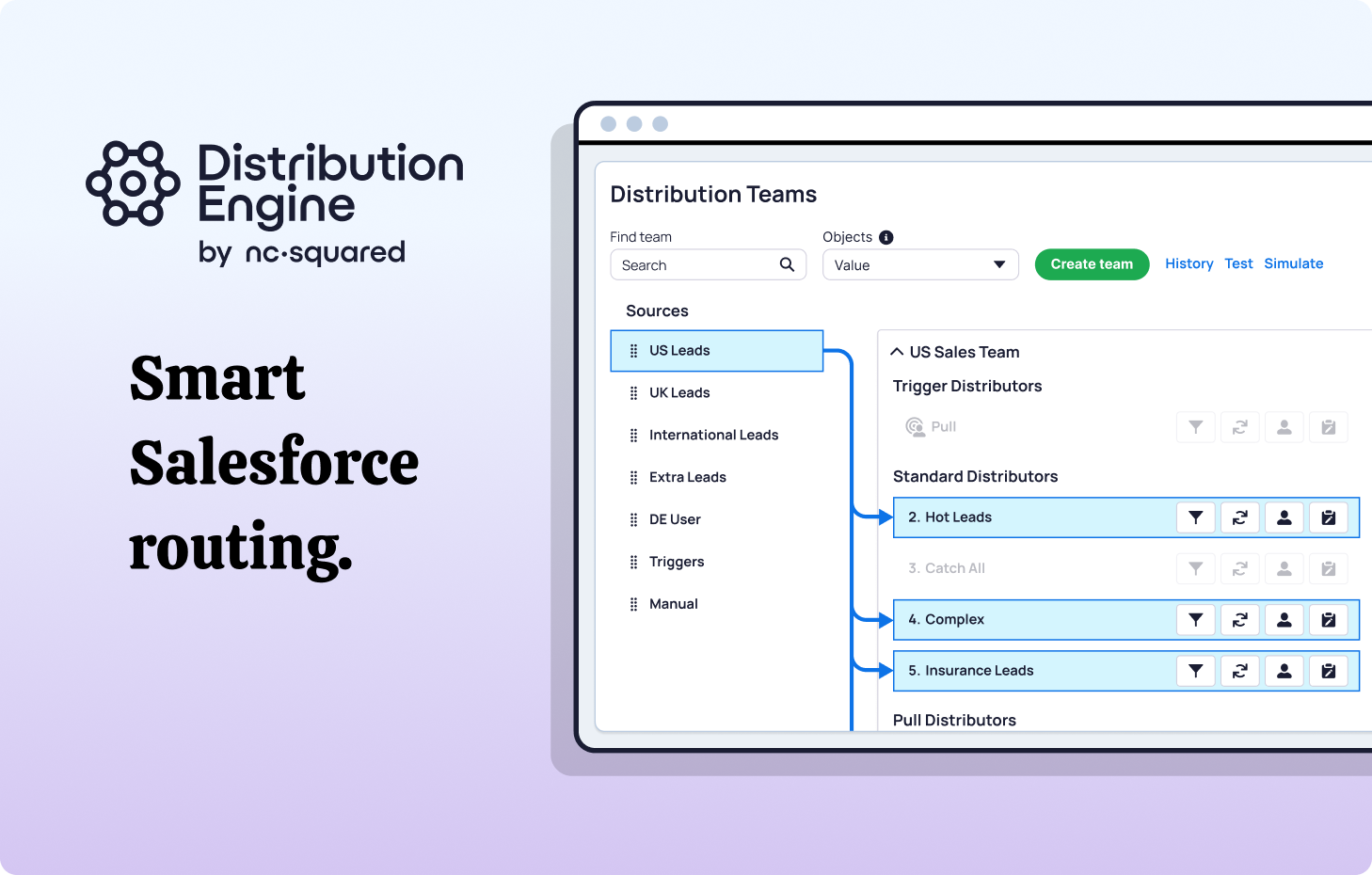
Distribution Engine handles this through pre-distribution classifiers that ensure clean, prioritized records reach your team - filtering out unqualified leads before they consume sales capacity.
Layer Two: Intelligent Distribution
Simple round-robin breaks when you add skill requirements, seniority levels, time zones, or shift patterns across your sales team.
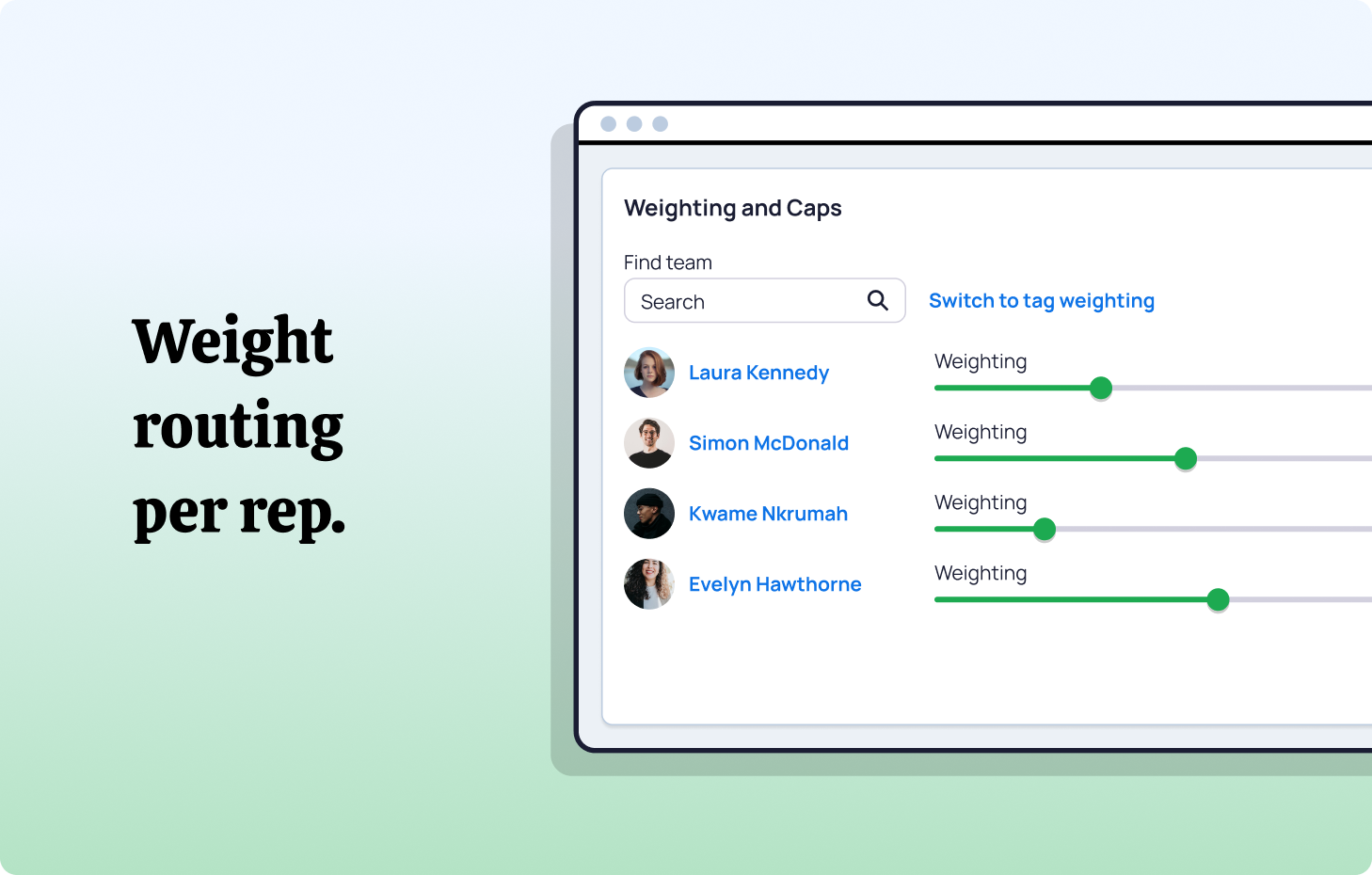
The fix: context-aware routing that understands weights, availability, and capacity.
Distribution Engine enables weighted round-robin, load balancing based on current workload, tag-based routing for specialized skills, availability controls respecting working hours, and caps preventing overload.
This approach helps streamline the sales process while maintaining fairness. 360Learning achieved 97% assignment accuracy, 40% conversion improvement for priority leads, and sub-10-minute response times.
Fairness means equal opportunity to hit quota based on real workload and availability - not just equal lead counts.
Layer Three: SLA Enforcement
Assignment without follow-up creates sales funnel leakage.
The fix: explicit SLAs with automatic enforcement.
Define clear service levels aligned with your sales cycle. Start the clock on assignment. Monitor for meaningful activity. If SLA breaches, automatically retrieve and reassign to the next available rep.
Tebra improved assignment accuracy by 95%, reduced response times by 40%, and converted 30% more potential customers after implementing automated SLA enforcement and out-of-office handling.
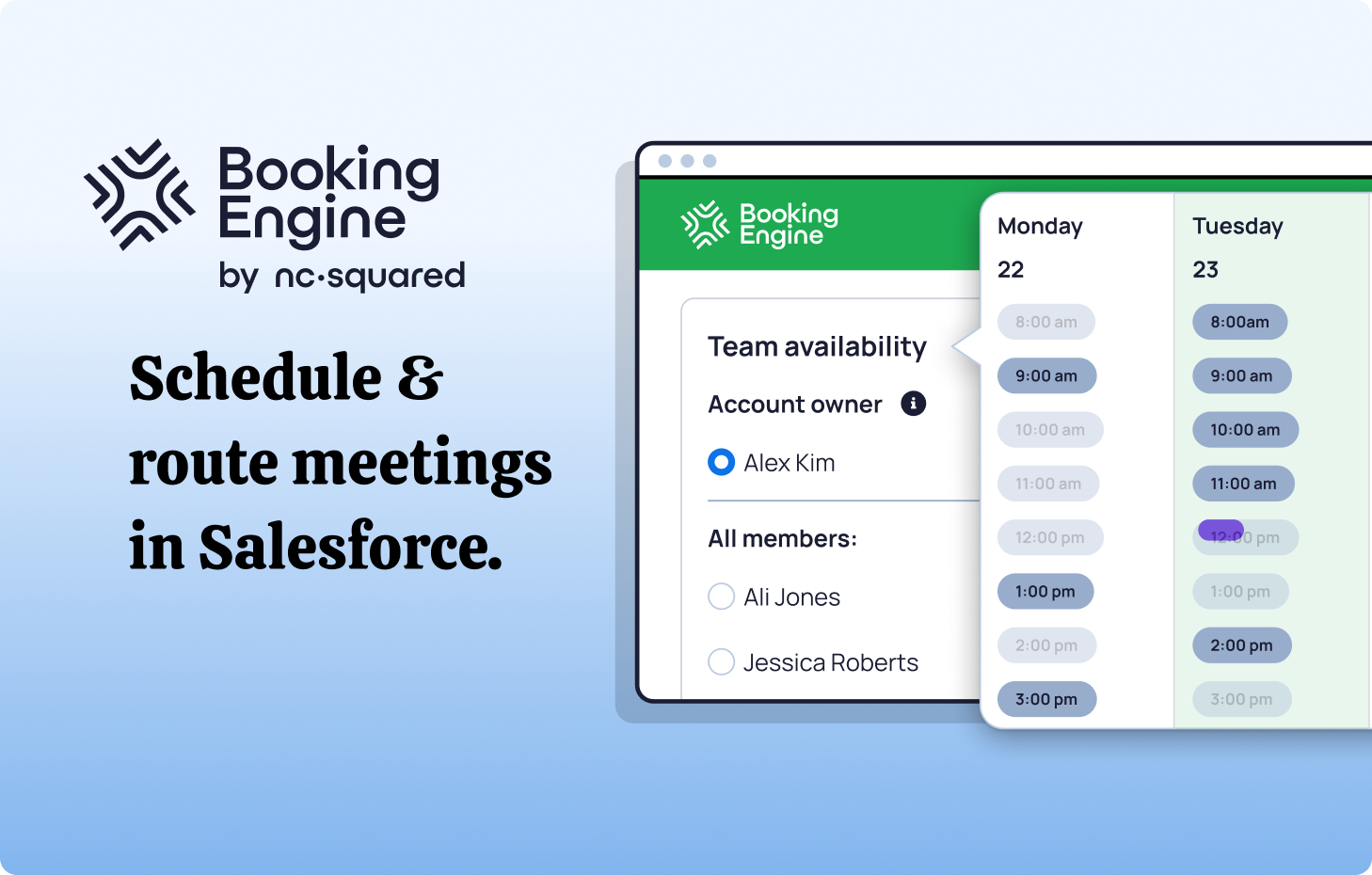
For marketing teams managing the full cycle, Booking Engine adds scheduling inside Salesforce - meetings automatically routed based on territory and availability, creating seamless touchpoints throughout the buyer's journey.
Why automation beats manual coordination.
Manual routing introduces delay. Distributed routing logic introduces technical debt. Both make rapid adaptation impossible as marketing efforts scale.
Distribution Engine delivers four structural advantages:
- No external dependencies: Everything lives inside your CRM.
- Click-to-configure control: Build and adjust routing logic without code.
- Built-in resilience: Availability, SLAs, and reassignment operate automatically.
- Transparent analytics: Track metrics on assignment distribution and speed-to-lead.
Shutterstock consolidated 18 queues into one, saving approximately 60 hours weekly while cutting response times by 6.5 hours - a cost-effective solution that scaled with their growth.
Your implementation roadmap.
Audit unassigned and stale records. Quantify leads sitting beyond target SLA. Estimate revenue impact using your average deal size. That's your business case.
Define "fair" for your organization. Equal lead counts, equal potential value, or equal workload? Your definition becomes configurable rules that optimize for the right outcomes.
Map out-of-office failure modes. If the answer is "leads wait," prioritize implementing availability controls and SLA-based reassignment.
Set one clear SLA and enforce it. Start simply: "All inbound demo requests worked within 30 minutes during business hours." Layer additional complexity after establishing baseline discipline.
Identify the primary constraint. Data quality, slow distribution, or rep inactivity? Fix the biggest lever first to maximize impact on conversion rates.
Integrate scheduling where momentum stalls. Booking Engine works with Distribution Engine so routing and scheduling operate as one workflow - reducing friction in the sales process.
The Bottom Line.
Effective inbound lead management is invisible when functioning correctly. Qualified leads arrive, reps respond, meetings book, and pipeline builds without intervention.
The work for Revenue Operations is designing systems that produce this outcome by default - not through heroic effort, but through thoughtful architecture that eliminates common pain points in lead management workflows.
Distribution Engine and Booking Engine provide the Salesforce-native routing and scheduling layer to deliver that architecture with less technical debt and more operational control.
Because sustainable pipeline velocity doesn't come from working harder. It comes from systems that don't let high-intent opportunities disappear into queue purgatory on Friday afternoons.
Fancy giving Distribution Engine a try?
Have a play around for free, or get in touch if you’d prefer to chat.
Take us for a spin with a 30 day Free Trial
Have a play around for free, or get in touch if you’d prefer to chat.
%20dark.avif)