
Salesforce Ben's AppAssessor review of Distribution Engine - check it out now!
Test it for free for 30 days or get in touch if you’d prefer to chat.
Fancy giving Distribution Engine a try?
Have a play around for free, or get in touch if you’d prefer to chat.
Action Tracking in Salesforce: Turn Activity Noise Into Pipeline Intelligence.
Key takeaways:
Action tracking turns activity noise into deal insight. Action tracking doesn’t just log events; it surfaces intent, commitments, and follow-through so leaders can clearly see which deals are moving and which are stalled.
Visibility depends on capturing momentum, not metadata. Standard Salesforce activity logs record what happened, but action tracking reveals whether actions progressed the deal and whether promised next steps actually occurred.
Real-time signals replace reactive pipeline management. By flagging missed commitments and stalled actions as they happen, teams shift from reviewing last week’s activity to proactively intervening when deals slow down.
Structured workflows reduce manual effort and improve consistency. Action tracking automates next steps, deadlines, and alerts—creating transparent chains of commitments that mirror how high-performing revenue teams operate.
Clean data and simplicity are essential for scalable tracking. The biggest failures stem from bad CRM hygiene and overly complex systems, while the strongest outcomes come from focused workflows, reliable fields, and predictable rules.
Action tracking only works when paired with adoption and automation. Teams see the biggest lift when tracking happens in the flow of work, supported by automation that reduces admin burden and delivers insights reps and leaders actually use.
It's Monday morning. You open your pipeline report. Seventy-three open opportunities. Six hundred logged activities in the past week. Calls made, emails sent, meetings held.
And you still can't answer the question your VP asked: which deals are moving and which ones are stalled?
The data exists. Your reps are logging activities. But the signal doesn't reach the surface. You see that a call happened on Tuesday, but not whether the promised follow-up materialized. You see that an email went out, but not whether it moved the deal forward or sideways.
This is the visibility paradox of modern revenue operations. Teams generate massive activity volume but leadership operates in a fog.
Many of the frustrations RevOps leaders shared in our customer research - manual handoffs, unclear ownership, hidden SLA failures - stem directly from this gap between occurrence and progression.
Standard activity logging captures occurrence.
Action tracking in Salesforce captures intent, outcome, and follow-through.
The difference determines whether you're managing pipeline or guessing at it.
Measuring Signals, Not Noise.
Effective action tracking delivers three measurable outcomes:
Visibility: Real-time awareness of deal health eliminates status theater and manual check-ins.
Accuracy: Historical action data reveals which activities correlate with won deals, tightening forecast models.
Leverage: Automated tracking reclaims hours spent chasing updates and auditing follow-through.
These benefits only materialize when tracking reflects actual selling motions, not generic activity quotas.
This is why NC Squared customers often pair Distribution Engine's SLA tracking and availability controls with lightweight action frameworks - once you trust who gets the work and when, you can trust the downstream insights. 360Learning, for example, cut response times to under 10 minutes and increased conversion by 40% after implementing structured action-based routing.
What Standard Salesforce Provides (& Doesn't).
Activity logs record events. Action tracking records momentum.
When your rep logs a discovery call, the standard approach captures metadata: duration, date, participants. That's the occurrence record. It proves work happened.
Action tracking captures the operational signal: what was discussed, what commitments were made, when those commitments are due, and whether they materialized. It creates forward-looking data instead of backward-looking receipts.
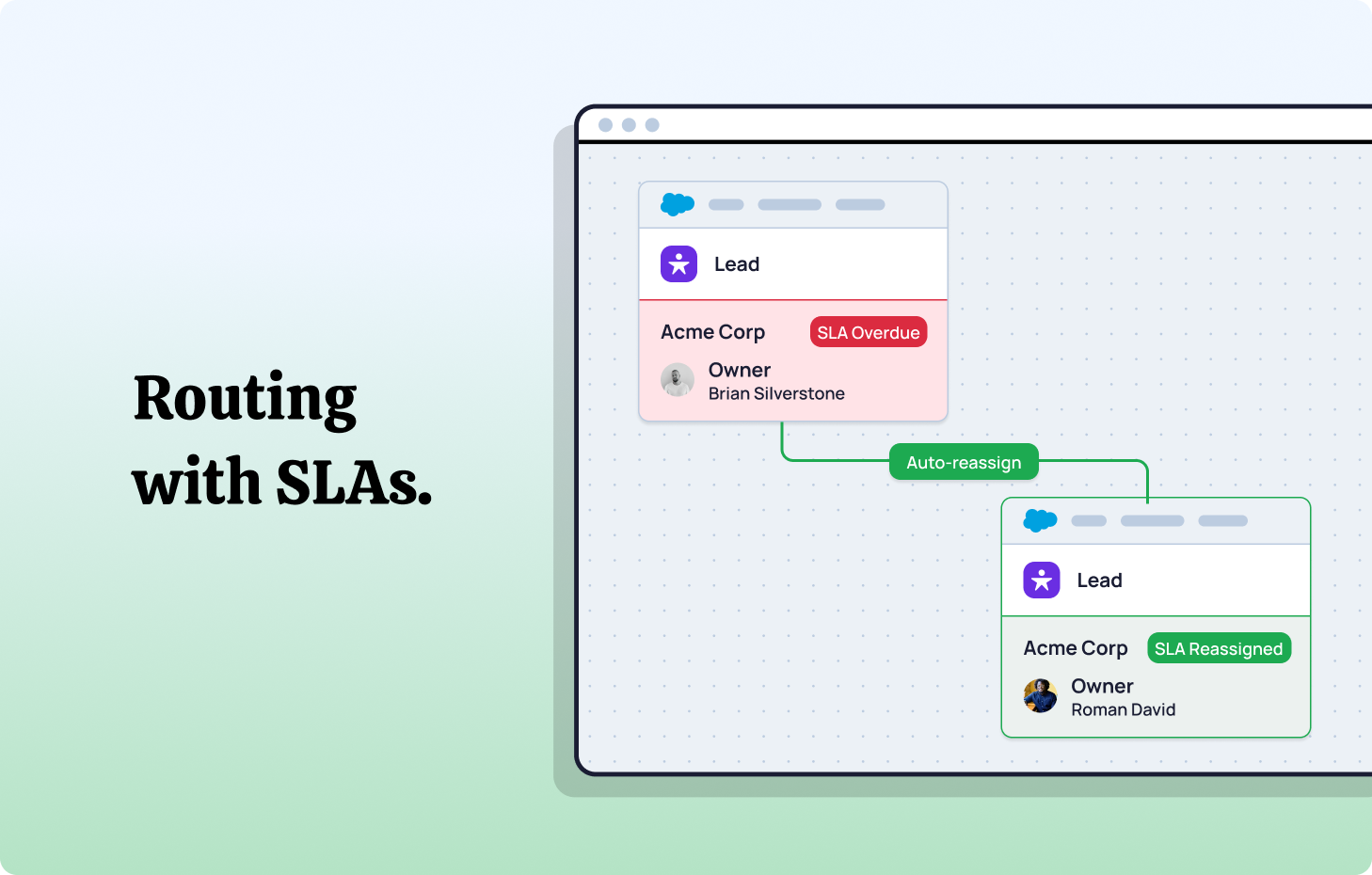
Our own view, based on years of building native Salesforce automation, aligns with this: the platform should surface what matters - commitments, SLAs, follow-through - in the flow of work, not after the fact. This is our products, like , Distribution Engine, include features like SLA countdowns and automated reassignment when commitments lapse.
The Visibility Gap.
Pipeline velocity problems show up predictably: missed commitments that nobody notices for weeks, gaps in multi-threading that surface during contract negotiations, delayed responses that stall momentum. We find this theme appears again and again: cross-team workflow blind spots, manual handoffs, late interventions, and managers stepping in only after deals slip.
Standard reporting shows you last week's activities during this week's pipeline review. Action tracking surfaces problems as they happen, while you can still intervene.
Your rep commits to sending pricing by Friday. Friday passes. No pricing sent. No follow-up logged. Standard Salesforce won't tell you. Action tracking flags it Monday morning.
And for RevOps leaders - who already battle tool bloat, misalignment, and constant firefighting - that's the difference between a proactive and reactive operating model.
How Action Tracking Works in Practice.
Workflow Example: Discovery to Demo
Standard approach: Rep logs call, maybe adds notes, manually creates follow-up task.
Action tracking workflow:
- Call record includes structured fields: stakeholders present, pain points identified, next step committed
- Next step auto-generates linked task with due date based on the commitment
- Missed deadline triggers alert to rep and manager
- Completed next step logs progression and triggers subsequent workflow
This reduces manual inputs and creates a traceable chain of commitments - mirroring how NC Squared's customers use SLA-based auto-reassignment and priority handling to ensure nothing ages unnoticed.
Multi-Threading Visibility
Complex deals require engaging multiple stakeholders. Action tracking shows engagement patterns, not just contact lists.
Which stakeholders have been contacted? When was the last touch? Are you reaching executive sponsors or stuck at practitioners?
This is especially relevant for high-volume or multi-region teams like Shutterstock, who previously struggled to get work to the right people at the right time. Their shift to structured routing and tracking cut response times by 6.5 hours.
Deal Progression Markers
Different sales motions have critical actions. Action tracking monitors whether they occur within expected timeframes.
A deal sits in "Negotiation" for 45 days. Standard reporting shows stage duration.
Action tracking shows that no pricing discussion has occurred in three weeks and the promised contract red-line never materialized.
Distribution Engine's Routing + SLA capabilities support this style of progression tracking by highlighting stalled work, overdue follow-ups, and rep availability issues - one reason Tebra improved response time by 40% and increased conversion by 30%.
The Implementation Reality
Setup requires clean data foundations: accurate contact roles, opportunity stages that reflect your real process, standardized fields.
There’s a common frustration most sales teams struggle with: bad CRM hygiene undermines automation. Many Salesforce Admins we interviewed cited incomplete data, ad-hoc requests, and field inconsistencies as the fastest way to break downstream workflows.
Most teams start narrow: one workflow, prove value, then expand.
This is the recommended pattern for Distribution Engine deployments as well - starting with a single routing workflow, validating outcomes, then scaling to opportunities, renewals, and Cases.
Common Pitfalls.
1. Tracking Metrics That Don't Matter
Activity volume doesn't equal pipeline health.
NC Squared's best-performing customers track progression indicators: commitments, SLA adherence, stakeholder breadth, and time-to-first-action. These correlate strongly with outcomes.
2. Over-Engineering Complexity
Twelve objects, 30 workflows, dashboards that track everything...and break when one field changes.
Teams in our customer base interviews emphasized the importance of transparency and auditability over volume of functionality. This is exactly why many prefer Distribution Engine's predictable rules over heavier systems.
3. Data Quality Failures
Duplicate contacts, misaligned accounts, inconsistent fields.
Your automation is only as trustworthy as your inputs.
This is why Distribution Engine includes lead matching, auto-conversion, and duplicate merging - to ensure the right owner gets the right work with the right context.
4. Ignoring Adoption
Reps will resist anything that adds admin burden.
Teams using Distribution Engine see the opposite when automation reduces effort: Aetna reclaimed 8 hours per day by eliminating manual assignment, which increased adoption and trust.
The Architecture That Works.
Think about Salesforce action tracking as two layers.
Foundation Layer: Structured fields, activity objects, reliable contact roles, real opportunity stages.
Distribution Engine contributes directly to this layer with classifiers, matching, and standardized logic.
Automation Layer: Triggers responding to commitments, SLA timers, exceptions, and follow-through.
This mirrors the routing architecture NC Squared advocates: lightweight rules, availability logic, and audit-ready logs.
When these layers work together, teams gain real-time visibility they previously assembled manually.
The Bottom Line.
Action tracking breakdowns show up in familiar ways: slips, missed follow-ups, false confidence, reactive coaching.
These failures share one root cause: the data exists, but it doesn't reach decision-makers fast enough.
A thoughtful architecture delivers what manual reporting can't: real-time visibility, proactive coaching triggers, and better decision-making.
This is exactly why revenue teams pair action-based tracking with NC Squared's routing, SLA handling, and availability logic - to ensure follow-through is captured, surfaced, and acted on.
Start Here: Your Action Tracking Checklist.
- Audit current state. What activities get logged? What insights do they generate? Where are the visibility gaps?
- Define your progression markers. Which activities correlate with won deals? What commitments matter most?
- Clean your foundational data. Fix contact relationships, standardize fields, eliminate duplicates.
- Start with one workflow. Pick discovery-to-demo or demo-to-evaluation. Prove value before expanding.
- Automate capture. Reduce manual entry burden. Make tracking happen in the flow of work.
- Close feedback loops. Show reps how tracking helps them win deals. Surface insights that change behavior.
- Monitor and iterate. Track adoption, measure impact on pipeline metrics, refine based on what works.
Revenue teams don't have time to assemble visibility from scattered activities. They need intelligence delivered by default.
NC Squared builds the Salesforce-native automation layer that makes that possible - turning every commitment, SLA, and handoff into operational clarity.
From lead routing and territory coverage to structured follow-through and cross-team workflows, Distribution Engine helps teams act faster, stay accountable, and deliver a consistent customer experience.
Fancy giving Distribution Engine a try?
Have a play around for free, or get in touch if you’d prefer to chat.





Take us for a spin with a 30 day Free Trial
Have a play around for free, or get in touch if you’d prefer to chat.
%20dark.avif)