
Salesforce Ben's AppAssessor review of Distribution Engine - check it out now!
Test it for free for 30 days or get in touch if you’d prefer to chat.
Fancy giving Distribution Engine a try?
Have a play around for free, or get in touch if you’d prefer to chat.
Sales Process Optimization: How Automated Lead Routing Transforms Salesforce Performance.
Key takeaways:
Manual routing is expensive infrastructure debt: Sales teams lose 60+ hours weekly in assignment time while slowing follow-up at the exact moment qualified leads enter your sales pipeline.
Out-of-the-box Salesforce tools solve for structure, not operations: Standard capabilities provide order but can't handle real-time signals like rep availability, capacity limits, or workload balancing without developer intervention.
Intelligent routing evaluates dynamic signals, not static rules: Effective automation considers availability, capacity, skills, account context, and urgency - not just territory or round-robin assignment.
ROI materializes in conversion lift and response speed: Automated routing delivers measurable gains (360Learning: 40% higher conversion, Tebra: 30% increase) directly tied to routing improvements, not generic sales performance.
Customer data quality determines whether automation scales or compounds chaos: Clean infrastructure - normalized geography, dedupe logic, consistent formats - is the foundation that makes intelligent routing operationally viable.
Your marketing teams deliver 200 qualified leads this week. Sales operations spends hours assigning them manually. The queue grows. Sales reps engage slowly. By the time someone reaches out, the buyer has moved on.
This is the hidden tax of manual routing: slow follow-up, inconsistent coverage, and operational drag across the revenue engine.
Manual Routing Creates a Structural Bottleneck.
Across customer conversations, sales teams describe the same pattern: partial automation, manual exceptions, constant firefighting. Admins and RevOps leaders step in to manually reassign when urgency demands it.
The data tells the story.
Shutterstock spent 60+ hours weekly hand-sorting Cases before automating. Aetna's sales managers lost eight hours daily on manual assignment. Tebra inherited a post-merger routing mess where conflicting systems created delays and inconsistent coverage.
These aren't one-off operational issues. They're symptoms of missing infrastructure.
Time cost. Sales leaders cite workload balancing as a top need. Manual routing consumes hours weekly. In Aetna's case, a full workday per manager.
Opportunity cost. 360Learning achieved sub-10-minute speed-to-lead and 40% higher conversion after automating routing. Tebra saw 40% faster response times and 30% more conversions. These gains tie directly to routing automation, not generic sales performance uplift.
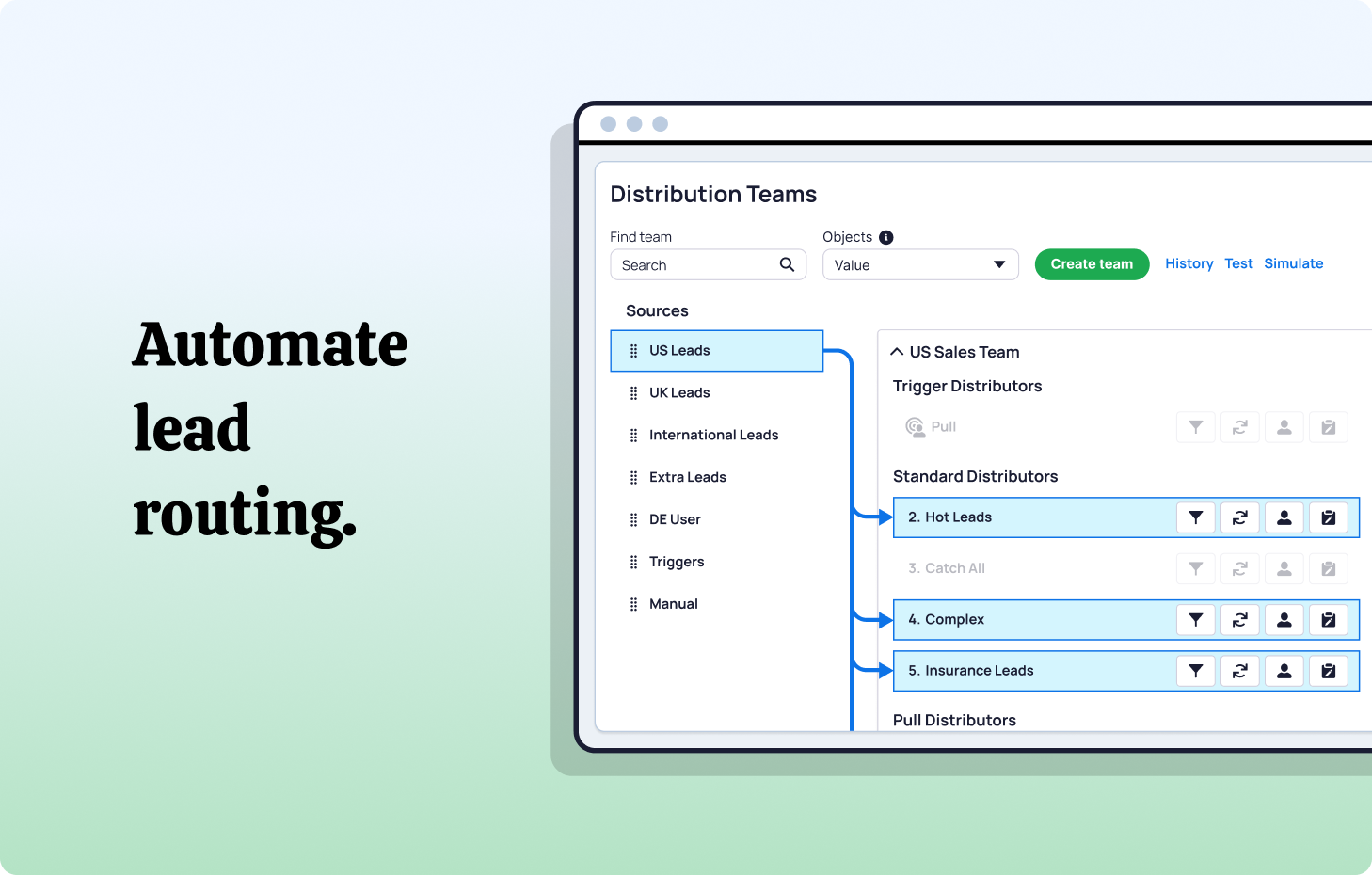
Error and leakage cost. In 360Learning's previous tool, leads were frequently mis-routed or lost entirely. After switching to automated routing, they hit 97% assignment accuracy monthly. When teams rely on humans for assignment, visibility gaps and mistakes are inevitable.
Scale cost. Manual processes degrade non-linearly. More leads, more products, more regions means exponentially more exceptions. As sales teams scale, rulesets become harder to maintain and visualize.
The conclusion is direct: revenue teams overpay for manual routing in time, pipeline leakage, and morale.
Where Salesforce Helps - & Where It Stops.
Salesforce provides solid structural elements: Lead Assignment Rules, Queues, Territory Management. These work well for static logic.
But sales teams need predictability, transparency, and real-time control. Native assignment can't account for agent availability, working hours, PTO, rep capacity, skills or language coverage, account context, priority or SLA rules, shifts, caps, or workload balancing.
Native options aren't scalable or flexible. Changes require hard-coded Flow or Apex.
Teams choose automated routing specifically because it provides a no-code, self-serve layer that admins and RevOps can manage without developer cycles.
What Intelligent Routing Looks Like.
Intelligent routing evaluates multiple signals in real-time, not just static fields.
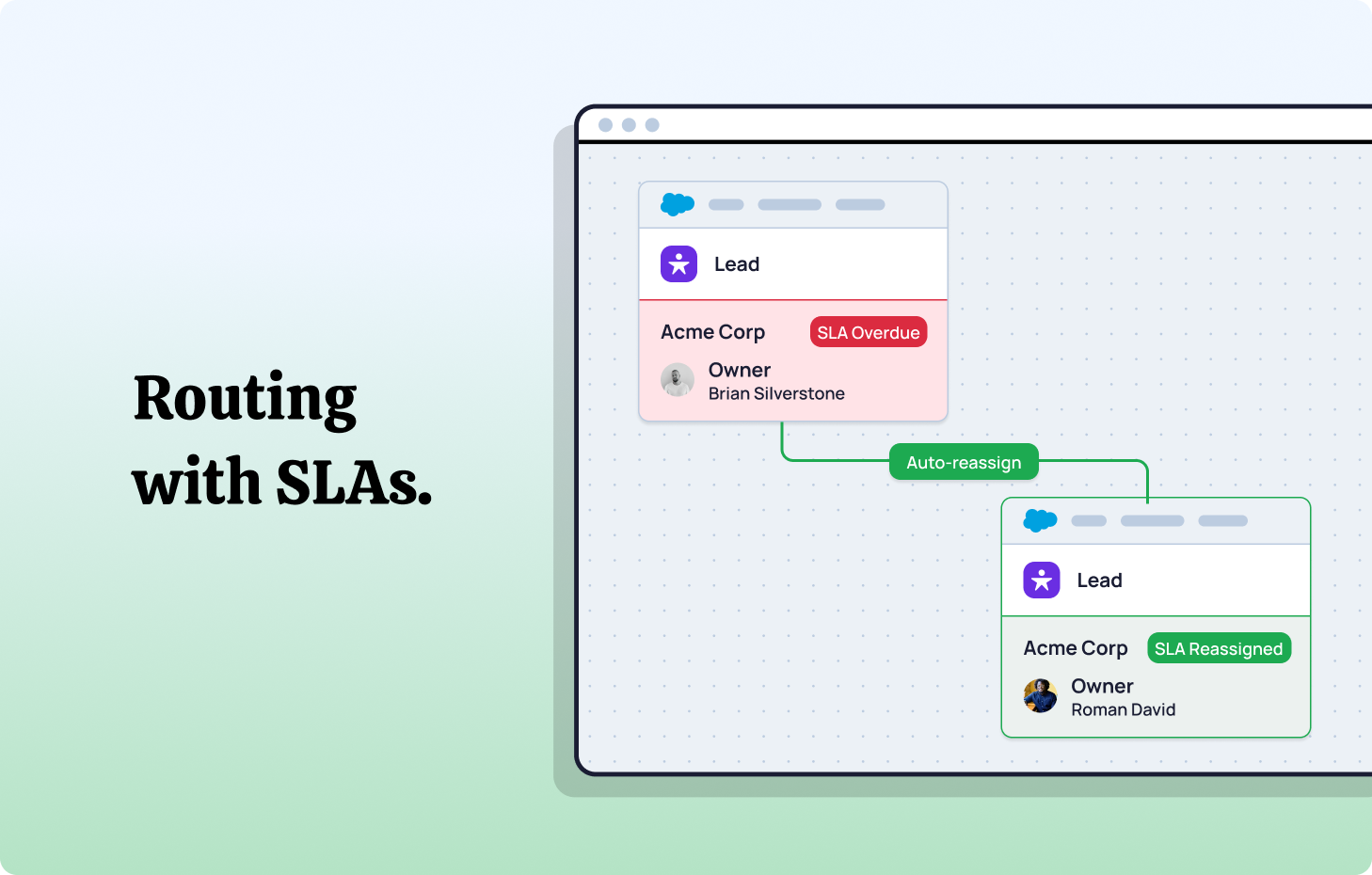
It considers availability through online/offline toggles or synced PTO. Working hours and shift patterns determine when sales reps can receive assignments. Skills, product expertise, or language matching through tags ensures the right fit. Capacity and workload tracking prevents overload. Territory and licensing maintain structural boundaries. Priority tiers handle P1, P2, P3 urgency. Account ownership or customer relationships preserve continuity. SLA timers and auto-reassign rules prevent leads from stalling in the sales funnel.
Distribution Engine takes that logic and makes it dependable at scale. Because it runs natively in Salesforce, every signal you rely on - availability, skills, workload, ownership, territory and SLA timers - is evaluated the moment a record is created. Classifiers fill gaps in messy data, tags ensure the right expertise is selected, and availability controls stop work from landing on someone who’s offline. The result is a routing layer that mirrors how your teams actually operate, so assignments stay accurate, timely and predictable even as volumes spike or staffing shifts.
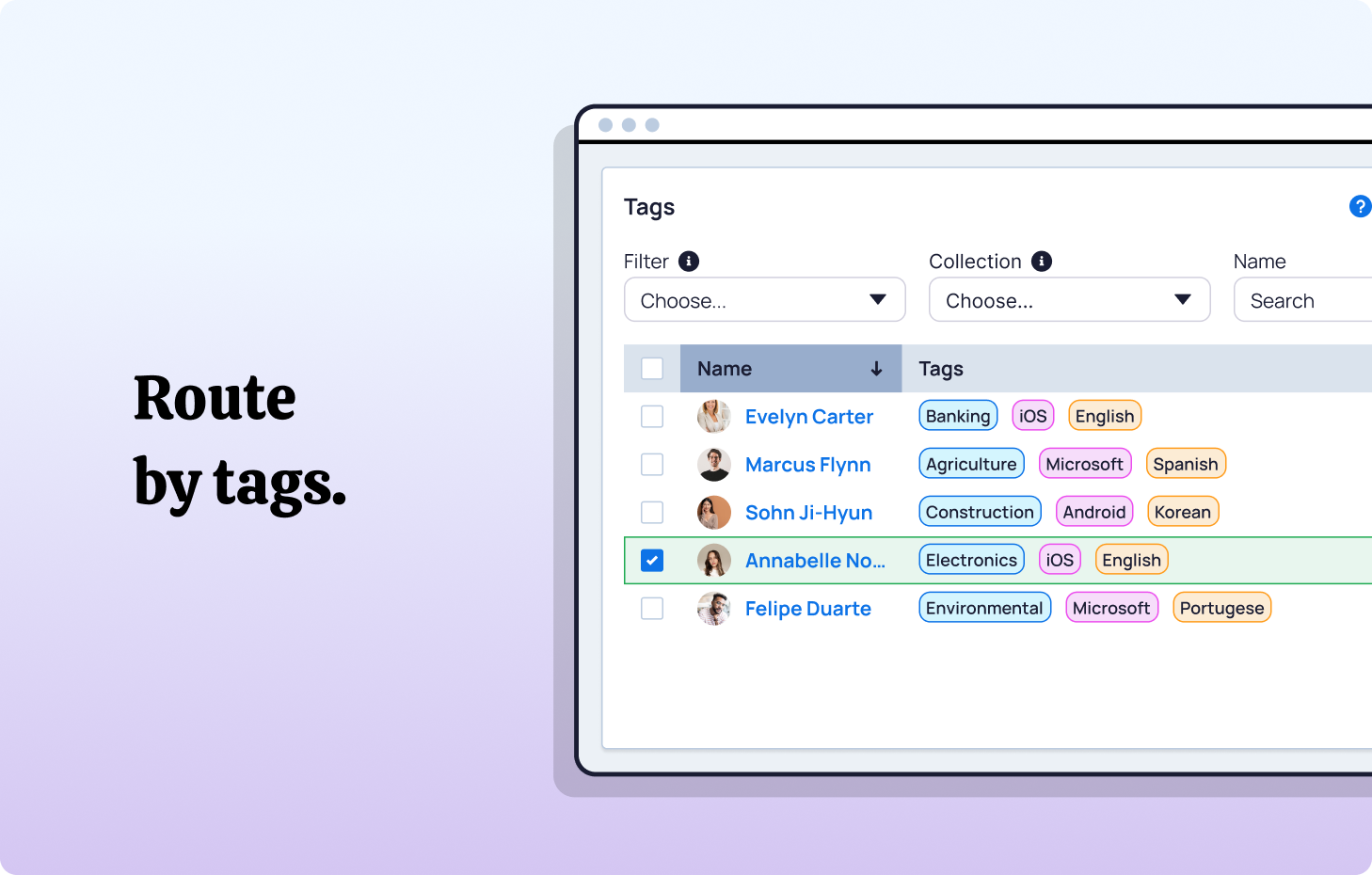
Tebra's results reflect exactly this: more accurate assignment, better availability coverage, reduced errors. They achieved 95% improvement in assignment accuracy.
Shutterstock shows the same pattern in support: automatic routing by language and location cut response times by 6.5 hours.
When routing intelligence reflects real-world constraints, follow-up becomes predictable and fast, directly impacting the buyer's journey and customer experience.
Data Quality Drives Everything.
Advanced routing requires clean data, consistent geography, and normalized fields.
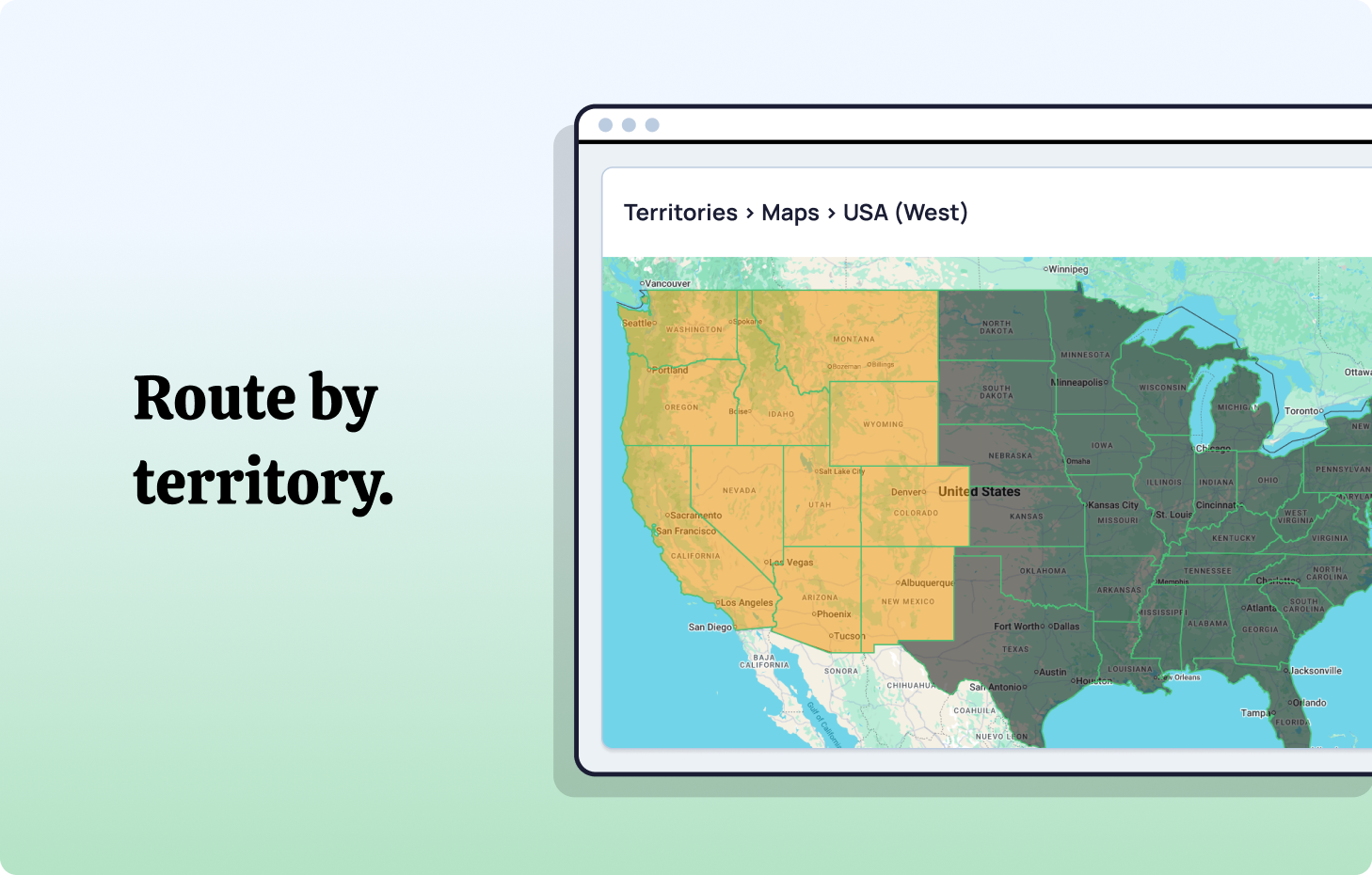
Capabilities that matter include territory inference down to ZIP codes, state inference from dial codes, duplicate matching and merging, lead-to-account and contact linking, auto-conversion to prevent dupes, and custom classification for stamping priority tiers through lead scoring.
Customers that invest in this foundation benefit immediately. Tebra consolidated two conflicting systems into one source of truth. Shutterstock collapsed 18 queues into one by standardizing taxonomy.
Clean sales data reduces friction everywhere downstream: forecasting, reporting, sales pipeline quality, SLA reliability, and data-driven insights.
Designing Routing Logic That Scales.
Scalable routing follows a few principles.
Start with the sales motion, not the technology. Map territories, handoffs, and lifecycle stages. Define fairness rules around caps, weights, rotations. Identify exceptions and account-owner rules.
Keep complexity visible. Sales teams value auditability over pure automation. Logs and performance dashboards help team members see what's happening and where adjustments are needed.
Test using real data paths. Customers consistently highlight ease of testing and safe iteration as critical adoption drivers. Build routing rules in sandbox, create test scenarios covering every edge case, validate assignments before going live.
Plan for change. Routing should adapt when market conditions shift or marketing investment changes. Rapid iteration is part of the value proposition, not a bug to fix later. This supports continuous improvement in your sales process.
What to Measure Once Routing Is Automated.
Track metrics and KPIs that connect operational efficiency to revenue outcomes.
Speed-to-lead measures created-to-first-contact time.
Time to first action tracks assignment-to-first-touch.
SLA adherence shows whether response windows are met.
Active load per rep reveals workload distribution.
Reassignment rate and outcome indicate whether initial routing was accurate.
Lead-to-opportunity creation rate connects routing to sales pipeline.
Cycle time from first touch to qualification shows velocity.
Contact rate demonstrates whether leads are actually workable.
Win rates and close rates validate routing effectiveness.
Conversion rates show whether the right salespeople are engaging the right prospects.
Customers see measurable uplift. 360Learning: 40% more conversions, sub-10-minute response. Tebra: 30% more conversions, 40% faster response. Shutterstock: 6.5 hours faster Case time. Aetna: 8+ hours saved daily.
These are concrete outcomes, not aspirational ones - valuable insights that demonstrate clear revenue growth and increased revenue.
Customer Outcomes Show the Pattern.
360Learning: 97% assignment accuracy, 40% higher conversion, sub-10-minute SLA.
Tebra: 95% reduction in assignment errors, 40% faster response time, 30% more conversions.
Shutterstock: 60 hours saved weekly, 6.5 hours faster response, 18 queues consolidated into one.
Aetna: 8+ hours saved daily, major reduction in workflow rules and manual manipulation.
The theme is consistent: less routing friction leads to faster response, which drives higher conversion or faster resolution, which improves customer experience and customer satisfaction.
Implementation: What Reality Looks Like.
Typical timeline runs 6-8 weeks for straightforward routing, 12-16 weeks for multi-team, multi-object, multi-region configurations - a step-by-step optimization process.
Common roadblocks include data hygiene gaps around address formats and inconsistent fields, hidden exceptions that only surface in production, cross-team calibration challenges, and change-management concerns around trust and transparency.
Success patterns emerge clearly. Pilot with one team or source. Document routing hierarchy before building rules. Standardize priority and geography fields early. Build SLAs into initial design, not as an afterthought. Use logs to validate and calibrate continuously. Engage stakeholders across sales teams and operations early. Address pain points in your current sales process through thoughtful sales strategy.
Your First 30 Days.
Week 1: Diagnose. Measure current speed-to-lead and first-action times. Identify routing gaps and data quality issues. Map inefficiencies and bottlenecks in workflows.
Week 2: Map. Define routing rules, priorities, skills, ownership. Align on fairness, caps, and SLA expectations. Document touchpoints across the customer journey and sales cycle.
Week 3: Clean. Normalize geography, enforce validation rules. Deduplicate leads and accounts. Enable matching logic. Eliminate data entry errors and establish clean customer data.
Week 4: Build. Configure in sandbox using classifiers and distributors. Create real-world test scenarios. Train team members, sales managers, and sales leaders in monitoring.
This mirrors what high-performing Distribution Engine customers do during rollout.
The Bottom Line.
Routing bottlenecks show up immediately in pipeline metrics: slower responses, missed SLAs, uneven workload distribution.
Manual routing is a structural weakness that undermines every other sales investment. You're spending on lead generation, paying competitive salaries, investing in CRM systems - then introducing friction at the exact moment leads enter your system.
Automated lead routing isn't a luxury. It's foundational infrastructure for sales efficiency and revenue operations. It streamlines routine tasks, enables sales professionals to focus on high-value sales activities, supports effective sales execution, and accelerates the path to closing deals and successful sales outcomes.
Distribution Engine delivers smart Salesforce-native routing for Leads, Cases, Opportunities, Accounts, and custom objects. Availability-based assignment, caps, weights, shifts. Classifiers for territory, matching, dedupe, priority. SLA timers and auto-reassign. 100% native reporting and logs.
These capabilities address what's missing from out-of-the-box Salesforce tools and align directly with RevOps and Salesforce Admin pain points. They support smarter decision-making, better outreach, improved lead qualification, and ultimately drive customer retention by ensuring customer needs are met efficiently.
Start with an assessment of your current routing performance. Understand where minutes are lost. Then build the infrastructure that turns lead volume into reliable revenue and supports your broader sales optimization strategies.
Because healthy sales pipelines aren't built on heroic effort. They're built on systems that don't let opportunities slip through architectural cracks - systems that optimize your sales process and enable your sales team to execute their sales strategy with precision.
Fancy giving Distribution Engine a try?
Have a play around for free, or get in touch if you’d prefer to chat.




Take us for a spin with a 30 day Free Trial
Have a play around for free, or get in touch if you’d prefer to chat.
%20dark.avif)